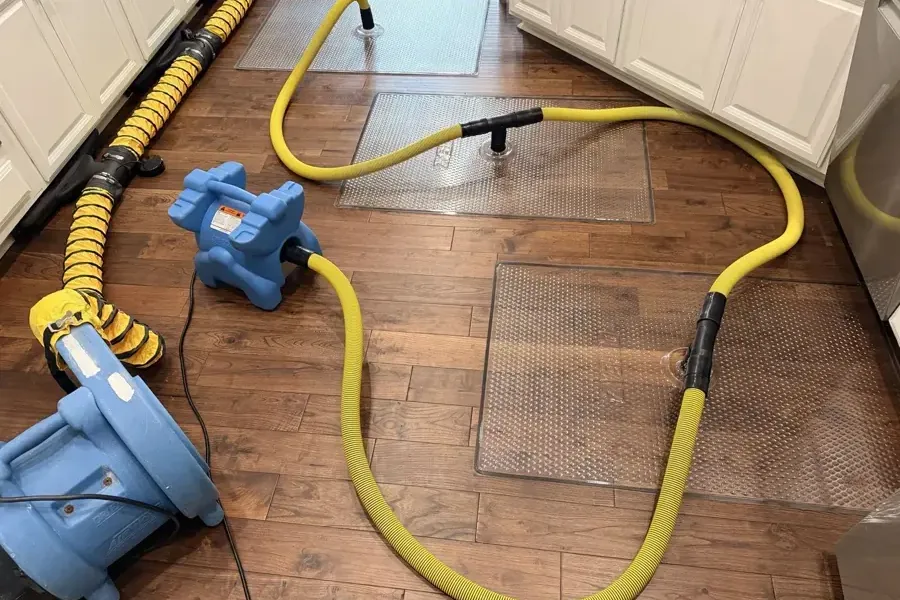
Many older Beverly houses are heated by hot-water or steam boilers feeding radiators or baseboard loops. After a summer off, the first cold week brings the system back, and that is when a weeping valve, a cracked radiator section or a failed joint shows itself.
Key takeaways
- A heating leak is a water loss, and in an older house it can run behind plaster and under hardwood before it shows.
- Switch off the boiler and close its water feed first, then let the system cool before touching pipes.
- A heating technician repairs the boiler or radiator, and the restoration team extracts and dries the building.
- Heating water is often rusty, so keep it off skin and treat it with care.
- Plaster, old hardwood and floor framing are dried to readings, not to a calendar.
Why the first weeks of heating season are the risky ones
A boiler sits idle for months. Valve packing dries out, gaskets shrink and old fittings lose their seal.
When the system is filled and fired again, pressure finds the weak spot. A small drip at a radiator valve can run for days behind a cover or a curtain before anyone notices.
Older systems have more places for that to happen. Radiators, valves, unions and pipe runs were added over many decades, and each joint is a place where age shows.
- Radiator valves that weep at the stem
- Cracked sections on cast-iron radiators
- Failed joints on baseboard loops along exterior walls
- A relief valve that discharges onto the floor
- Pinhole leaks in old pipe near the boiler
Hot-water systems and steam systems leak differently
Hot-water loops
A hot-water system is pressurized, so a leak keeps running until the feed valve closes. Water can be hot, and it often carries rust and treatment additives.
Because the loop refills itself, a small leak can move a lot of water over a week. A pressure gauge that keeps falling is the clue.
- The leak grows when the boiler refills the loop
- Wet spots follow the pipe path along walls and floors
Steam systems
A steam system moves vapor, then condensate. Leaking air vents and radiator valves can spit hot water and leave rings on floors and walls.
Steam leaks are often small and constant. The damage builds slowly, which is why a ring on the floor deserves a look before the season gets going.
- Spitting vents and hissing valves are early warnings
- Condensate drips can soak the floor under a radiator
What to do the moment a leak is found
Heating water can scald, and a wet floor near a boiler can carry electrical risk. The order of the steps matters.
Do not loosen a fitting or open a hot valve to see where it drips. Working on a pressurized loop can make the leak worse or cause a burn.
- Switch off the boiler at its emergency switch
- Close the water feed valve to the boiler
- Let the pipes and radiators cool before touching them
- Put a bucket and towels under the drip and move rugs and furniture
- Shut off power to any wet outlet if the panel is dry and reachable
- Photograph the leak and the wet area, then call a heating technician and the restoration crew
Where the water goes in an older house
Older houses give water many places to hide. It runs behind plaster walls and lath, under old hardwood, and through the floor to the ceiling below.
Heating loops and radiator pipes often run along exterior walls, so a leak there can soak insulation and framing as well as the wall surface.
A leak that starts on an upper floor travels. It follows the pipe, drops through the floor and shows up as a stain on the ceiling below, sometimes in a different room from the radiator.
- Plaster and lath behind radiators
- The gap under old hardwood boards
- Ceiling plaster below a second-floor radiator
- Insulation and framing in exterior walls
Extraction and structural drying
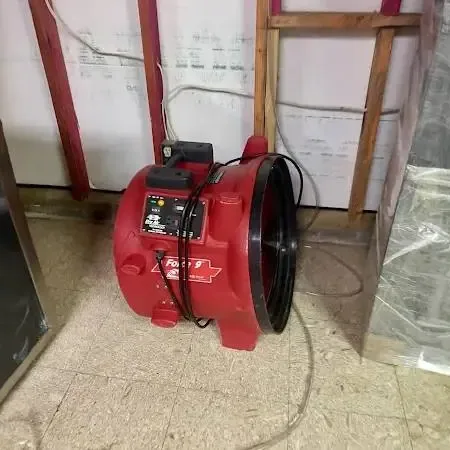
The crew extracts standing water first, then opens walls or lifts boards where readings show water inside. The work is described under boiler and radiator leak cleanup, and the first stage is water extraction.
Old hardwood can cup or buckle if it stays wet, and plaster can hold water far longer than it looks. Structural drying uses dehumidifiers and air movers until readings come down.
What gets measured
- Moisture in plaster, wood and framing
- Humidity in the room each visit
- The ceiling or wall below a leaking radiator
Why timing matters
Mold can begin within 24 to 48 hours on damp wood and paper. Fast extraction and steady readings keep that risk down.
Signs of a hidden heating leak
Not every heating leak drips onto a floor. Some appear only as a pattern, and the pattern is worth noticing.
A boiler that needs to be refilled often is losing water somewhere. A musty smell near a baseboard, bubbling paint or a damp patch on a plaster wall are other clues.
- A pressure gauge that keeps dropping or a boiler that refills again and again
- Paint that bubbles or plaster that stains near a radiator or baseboard
- A musty or metallic smell in a room that was fine last winter
- A rise in the water bill with no clear cause
- Warped boards or cupping near a radiator
Repair and prevention
A heating technician repairs the boiler, the radiator or the piping. The restoration crew deals with the water, not the heating equipment.
The technician's notes help the cleanup too. A record of the failed part, the date and the repair supports the insurance file and tells the crew whether the leak has stopped.
Prevention is mostly attention. Walls and rooms that stay cold are where frozen pipe damage starts, and the same habits help with boiler leaks.
- Look at radiator valves and the floor beneath them when the heat first comes on
- Check the boiler pressure gauge and the area around the relief valve
- Wipe away stains and rust marks as early warnings
- Schedule annual boiler service before the cold comes
Questions
Is water from a boiler leak safe to touch?
Not without care. Heating water can be hot, and it often carries rust and treatment chemicals. Let the system cool and keep skin contact down.
Can a radiator leak ruin a hardwood floor?
It can. Hardwood cups and buckles if it stays wet, so extraction and drying should start quickly and follow readings.
Does homeowners insurance cover a heating system leak?
It depends on the policy and the cause. Many policies cover sudden leaks but not slow ones, so photographs and readings help.
Who fixes the leak, the restoration crew or a heating technician?
A heating technician repairs the equipment and piping. The restoration crew extracts the water and dries the building.
Is a small drip worth worrying about?
Yes. A small drip can wet plaster, hardwood and framing over days, and it often gets worse once the system runs under full pressure.
What does a steam radiator leak look like?
Look for spitting vents, wet rings on the floor under a radiator and hissing valves. Condensate can also drip from the valve stem.