Structural Drying and Dehumidification in Beverly, MA
Drying is the part of water damage nobody sees. The drying team sizes air movers and LGR dehumidifiers to each room and keeps them running in Beverly homes until wet materials read dry, 24/7.
(888) 629-3140Get the framing and floors dried right- LGR dehumidifiers
- Daily psychrometric logs
- 2 to 4 point dry goal
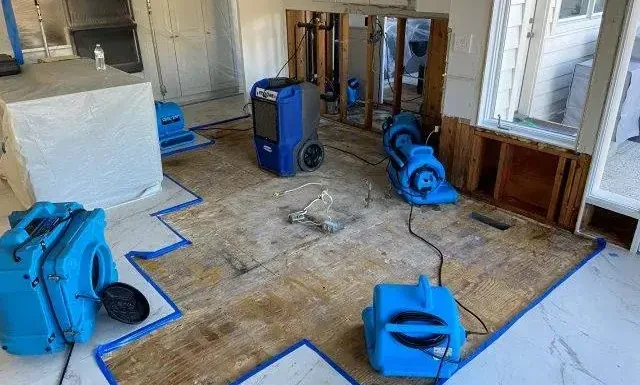
What to do first about structural drying and dehumidification
- 1
Keep it closed
Leave windows and doors the way the crew sets them.
- 2
Leave units running
Do not switch off fans or dehumidifiers.
- 3
Keep the heat steady
Warm air dries faster than cold.
- 4
Clear the work area
Keep paths open for daily readings.
How structural drying and dehumidification is handled, step by step
Each step follows the IICRC S500 drying standard, and the right-hand column is the record that step leaves in the claim file.
- 01MeasureMoisture map and dry reference set.Moisture map with the category and class
- 02PlanThe class decides air movers and dehumidifiers.Timestamped photos before anything is removed
- 03DryEquipment adjusted every day.Daily psychrometric and moisture log
- 04ProveReadings within 2 to 4 points of dry.Final readings against a dry reference
What does structural drying and dehumidification cost in Beverly, MA?
Structural drying here typically runs $1,000 to $8,000, depending on how many rooms and how much dense material is wet. The water category, square footage, material class and how fast drying started move the number most.
Class 1 or 2, one room
$1,000 to $2,500
- Air movers
- LGR dehumidifier
- Daily readings
Several rooms
$2,500 to $5,000
- Cavity drying
- Floor drying
- Psychrometric log
Class 4 materials
$5,000 to $8,000+
- Desiccant units
- Hardwood panels
- Extended monitoring
These are typical ranges, never a quote. The category of water, the square footage, the material class and how fast drying started move the number most. The water damage cost calculator gives a closer planning range.
A wall can feel dry to the touch and still hold enough water inside to rot sill plates and lift floors months later. Structural drying is how that hidden moisture comes out: measured, controlled and proven with readings rather than guessed at.
Classes of drying
The IICRC S500 standard sorts losses by how much wet material there is and how hard it is to dry. The class sets the equipment plan.
- Class 1: a small area with little absorbed water
- Class 2: a whole room, with carpet and walls wet
- Class 3: water from above, soaking ceilings and walls
- Class 4: plaster, hardwood, stone and other dense materials
Old materials dry differently
Older homes here are full of Class 4 materials: plaster on wood lath, old-growth hardwood, wide-board subfloors and stone foundations. They give up water slowly, so the drying team closes off the area, runs LGR or desiccant dehumidifiers and uses panel systems on hardwood. Opening windows rarely helps, because outside air is often wetter than the air inside.
Walls feel dry but the floor still cups? Moisture is hiding in the framing.
Measure what is still wetProving the job is done
Readings are taken every day and logged with temperature and humidity. Equipment comes out when wet materials read within 2 to 4 points of a dry reference material in the same building. The drying time estimator gives a rough schedule, and water extraction comes first on almost every job.
Leave the equipment running
Turning off air movers or dehumidifiers overnight to save power or quiet the house adds days to the drying. Keep doors and windows the way the crew sets them.
Structural drying and dehumidification across Beverly and nearby
The restoration team covers ZIP 01915 end to end, from Downtown, Goat Hill and the Cove to Montserrat, Centerville, Ryal Side and the north side, out along Hale Street to the Farms and Prides Crossing.
Nearby work reaches Danvers, Salem, Peabody, Wenham, Hamilton, Manchester-by-the-Sea, Marblehead and Lynn.
Related water damage services
Structural Drying and Dehumidification questions, answered
What owners ask most about structural drying and dehumidification, from drying time to the claim file.
Ask the drying team by phoneWhat is structural drying?
It is the controlled drying of the building itself, meaning framing, subfloor, walls and floors, with air movers, dehumidifiers and daily moisture readings until materials reach a measured goal.
How is it known when the house is dry?
Each wet material is compared with a dry reference of the same material in the same building. Drying is done when readings fall within 2 to 4 points of that reference.
Why does plaster take longer to dry than drywall?
Plaster is dense and thick, and it sits on wood lath that also holds water. It is a Class 4 material that releases moisture slowly.
Can fans from the hardware store do the job?
Household fans move air but do not pull water out of it. LGR dehumidifiers remove the moisture that air movers lift from materials, which is what actually dries the structure.
Is structural drying covered by insurance?
Drying after a covered water loss is usually part of the claim, and the daily drying log supports it. Coverage depends on your policy, so check it with your own insurer.
What happens if a house is not fully dried?
Moisture left in framing and subfloor leads to warped floors, peeling paint and rot, and mold can start growing in wet materials within 24 to 48 hours.
Need the structure dried and proven? Get the readings started.
The drying team sets equipment to each room's class and logs readings daily until the goal is met. Dispatch runs 24/7.