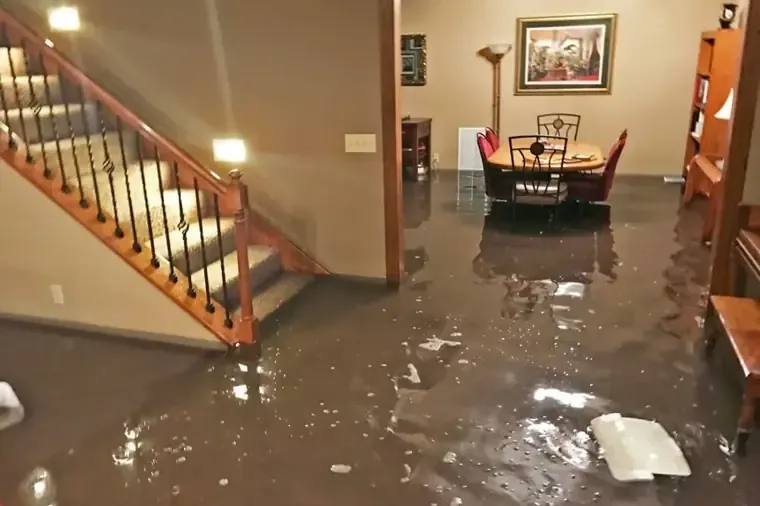
Sawmill Brook runs through the heart of Manchester-by-the-Sea, and its watershed covers two-thirds of the town, including Downtown and the harbor area. In May 2006 more than 12 inches of rain turned the brook into a flood that damaged 150 homes.
Key takeaways
- The May 2006 Mother's Day Flood put 6 feet of water on roads beside Sawmill Brook, washed out the School Street bridge and damaged 150 homes.
- Brook water carries silt, debris and sometimes sewage, so it is treated as contaminated water.
- The Central Street culvert and tide gate back water up into the brook in large storms, and a replacement is planned, not built.
- The town counts 19 structures with repeated flood losses, 15 of them single-family homes.
- Day one is safety, extraction, sorting contents and setting up drying, with photographs at every step.
What the Mother's Day Flood showed
From May 9 to 16, 2006, more than 12 inches of rain fell, and the brook spilled across the low ground around it. The flood is the benchmark that local planners still use when they talk about the brook.
The numbers tell the story. Water reached 6 feet on roadways beside the brook, and Route 127 became impassable.
The flood still matters because it shows what the brook does when the ground is saturated and the culverts cannot keep up. A count of 150 damaged homes is a large share of a town this size.
- More than 12 inches of rain in about a week
- 6 feet of water on roads beside Sawmill Brook
- The School Street bridge washed out
- 150 homes damaged
- Route 127 impassable
Why Sawmill Brook backs up
The flooding runs from just south of Route 128 down to Central Pond and the Central Street tide gate. Poorly infiltrating soils and a channelized stream make it worse, because rain runs off quickly instead of soaking in.
The Central Street bottleneck
The Central Street culvert, tide gate and seawall are described as particularly problematic in large storms, backing water up into the brook.
The town plans to replace the culvert, remove the tide gate and restore Central Pond to cut flooding upstream as far as School Street. Construction is possible in 2026 or 2027 if permits and grants come through, so the work is planned, not finished.
Old culverts and beaver dams
Many culverts and bridges along the brook are over 100 years old. Crews from the Department of Public Works report dozens of culverts that are undersized, in poor condition or blocked by beaver dams.
How brook water gets into a house
Brook flooding rarely looks like a pipe burst. It rises slowly, then fast, and it takes the easiest route in.
Basement flooding has been reported on Norwood Avenue, and other streets named in the local flood survey include Brook Street, School Street and Blue Heron Lane.
Rocky, shallow soils drain poorly, so rain does not soak away before it reaches the brook. The result is fast, high water that tests every low door and window.
- Through basement windows, bulkheads and the foundation
- Up through floor drains and sump pits when the brook rises
- Through doors and garage openings at ground level
- Along utility penetrations in the foundation wall
Day one: safety and extraction
Brook water is not clean. It carries silt, debris, fuel and sometimes sewage from overwhelmed drains, so it is treated as Category 3 water.
The first day is safety, then removal. The work is laid out under storm and flood cleanup, and the basement side is covered under basement flooding cleanup.
What the owner does
- Stay out of moving or deep water
- Shut off power to the wet area only if the panel is dry and reachable
- Photograph the water marks and damaged contents
- Keep children and pets out of the affected rooms
What the crew does
- Pumps and extracts the standing water
- Shovels out silt and debris from floors and corners
- Removes porous materials the water touched
- Cleans and treats hard surfaces with antimicrobial
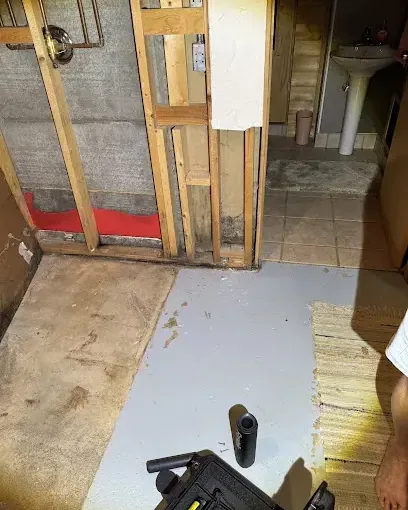
Silt, contents and drying
Silt is easy to underestimate. It settles in wall bases, behind trim and under stored items, and it keeps materials damp long after the water is gone.
Contents are sorted into what can be cleaned and what has to go. Paper, fabric and upholstery that sat in brook water are usually lost, while hard goods can often be cleaned.
Dehumidifiers and air movers then run until moisture readings fall to dry levels. Mold can begin in 24 to 48 hours on damp materials, so the sooner the water is out, the better.
- Wall bases and trim opened where silt collected
- Insulation and bottom drywall removed when saturated
- Subfloor and framing dried with equipment placed by readings
- Daily moisture logs kept for the insurer
Getting a house ready before the next storm
A house near the brook cannot stop a flood, but it can be ready for one. The steps are simple and most cost little.
The goal is to make day one shorter. Dry stock, clear drains and known shutoffs mean the crew starts on water, not on moving boxes.
- Keep valuables, files and electronics above the lowest floor
- Test the sump pump and keep the discharge clear
- Clear leaves from gutters, downspouts and yard drains
- Know where the main water shutoff and the electrical panel are
Homes with a flood history
The town counts 19 structures with repeated flood losses, made up of 15 single-family homes and 4 non-residential properties. Those structures had 44 losses between 1978 and 2015.
Owners in that position benefit from a plan. The town also enforces a stricter building code than the State in the 100-year floodplain, so rebuilding questions are worth asking the town before work starts.
The flood cleanup page for the wider region shows how a typical job is scoped.
- Keep a dated photo file of every flood and every repair
- Store valuables above the lowest level
- Learn where the main shutoffs are before the next storm
- Ask the town about local rules before repairs begin
Questions
Is brook water in a house treated differently from rain?
Yes. Brook water carries silt, debris and sometimes sewage, so it is handled as contaminated water and porous materials it touched are usually removed.
How much damage did the Mother's Day Flood do?
More than 12 inches of rain fell in May 2006, putting 6 feet of water on roads beside Sawmill Brook. The School Street bridge washed out and 150 homes were damaged.
Is the Central Street culvert replacement finished?
No. The town plans to replace the culvert, remove the tide gate and restore Central Pond, with construction possible in 2026 or 2027 if permits and grants come through.
What happens to carpet and drywall after brook flooding?
Carpet, pad and wet drywall are usually removed because brook water contaminates them. Solid framing and masonry are cleaned and dried in place.
Which streets are named in the local flood survey?
Norwood Avenue, Brook Street, School Street, Blue Heron Lane and the parking lot near Town Hall on Central Street are all named.
Does basement flooding always mean sewage?
Not always. Brook water and groundwater are contaminated in their own way. Dark water with a sour smell and water at a floor drain point to sewage, which needs even stricter handling.