Appliance Leak Water Damage in Manchester-by-the-Sea, MA
Washers, dishwashers and refrigerator ice maker hoses leak slowly behind appliances and under cabinets. With large homes and many rooms, a small hose failure can reach a lot of floor before it is seen.
(888) 629-3140Manchester-by-the-Sea appliance leak help- Leak source found
- Cabinets and floors dried
- Hoses checked
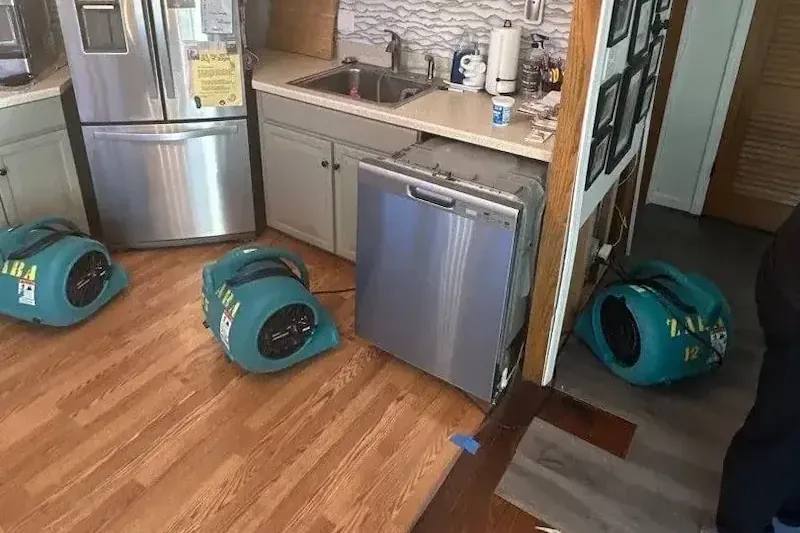
What to do first about appliance and supply hose leaks
- 1
Find the source
The appliance is moved and the failed hose located.
- 2
Pull the water
Extractors clear the floor and cabinet bases.
- 3
Open wet areas
Toe kicks and flooring are lifted where readings are high.
- 4
Dry and verify
Equipment runs until meters show dry cavities.
How appliance and supply hose leaks is handled, step by step
Each step follows the IICRC S500 drying standard, and the right-hand column is the record that step leaves in the claim file.
- 01TraceThe leak path is followed back.Moisture map with the category and class
- 02ExtractWater is pulled from floors and cabinets.Timestamped photos before anything is removed
- 03OpenWet toe kicks are lifted.Daily psychrometric and moisture log
- 04DryMeters confirm the cavities are dry.Final readings against a dry reference
What does appliance and supply hose leaks cost in Manchester-by-the-Sea, MA?
Appliance leak water damage in Manchester-by-the-Sea generally runs $800 to $2,000 when caught early in one room, $2,000 to $4,000 under cabinets and $4,000 to $6,000+ when water reaches the floor below.
Caught early, one room
$800 to $2,000
- One room affected
- Short extraction
- Light drying gear
Under cabinets
$2,000 to $4,000
- Toe kicks opened
- Subfloor dried
- Longer drying run
Into the floor below
$4,000 to $6,000+
- Ceiling below checked
- Two levels dried
- Extended monitoring
These are typical ranges, never a quote. The category of water, the square footage, the material class and how fast drying started move the number most. The water damage cost calculator gives a closer planning range.
In Manchester-by-the-Sea, a failed supply hose is a quiet kind of water loss. The leak may drip for weeks behind a washer or beneath a dishwasher, and the damage shows only when a floor softens or a cabinet swells.
Where the water goes
Over 45% of houses here have 8 or more rooms, so a kitchen or laundry leak often has plenty of floor and wall to travel through. Water moves under cabinets, along baseboards and down into the ceiling of a room below.
- Appliances are pulled out so the source is visible
- Cabinet bases and toe kicks are checked and opened
- Flooring is tested for moisture and lifted if needed
- Rooms below are scanned for dripping or staining
Drying around fixed cabinets
Cabinets and counters are hard to move, so drying equipment is often placed through small openings in toe kicks or cabinet backs. This dries the wet subfloor without removing the whole kitchen, and meters confirm when the cavity is dry. A similar tank problem is covered on the water heater page.
Replace old hoses
Rubber hoses wear out over time, so after the cleanup the owner may want braided hoses installed by a plumber.
A slow hose leak keeps rotting cabinets and floors, so the call should come as soon as the damage is noticed.
Call about the leaking applianceAppliance and supply hose leaks across Manchester-by-the-Sea and nearby
Appliance leaks are handled in kitchens and laundry rooms across 01944, from Downtown buildings and shoreline houses to homes on Pine Street, Pleasant Street, Beach Street, Putnam Court and Forest Lane.
The same service nearby: appliance and supply hose leaks in Beverly, Danvers, Salem.
Related water damage services
Appliance and Supply Hose Leaks questions, answered
What owners ask most about appliance and supply hose leaks, from drying time to the claim file.
Ask the drying team by phoneWhich appliances commonly cause water damage?
Washing machines, dishwashers and refrigerators with ice makers are common sources, mostly through worn supply hoses, loose fittings or clogged drain hoses.
How long can a hose leak go unnoticed?
A slow drip behind an appliance can run for weeks, which is why swollen cabinets, a musty smell or soft flooring are often the first signs.
Can the floor under a dishwasher be saved?
Often yes if it is dried promptly. Meters check the subfloor, and flooring that has cupped, softened or stayed wet is lifted and replaced.
Does insurance cover an appliance leak?
Many policies cover sudden leaks but may exclude long, slow seepage. Photos, moisture readings and notes on the source help the adjuster decide.
Should the water supply be shut off?
Yes. Close the valve behind the appliance or the house shutoff, then unplug the unit if it is safe to reach. Standing water near outlets calls for the breaker to be turned off.
What if the water reached the room below?
The ceiling underneath is checked and drained if it holds water. The ceiling leak page covers that stage.
Dry the kitchen or laundry floor
Call now, any hour, and a crew will explain how the leak is traced, extracted and dried.