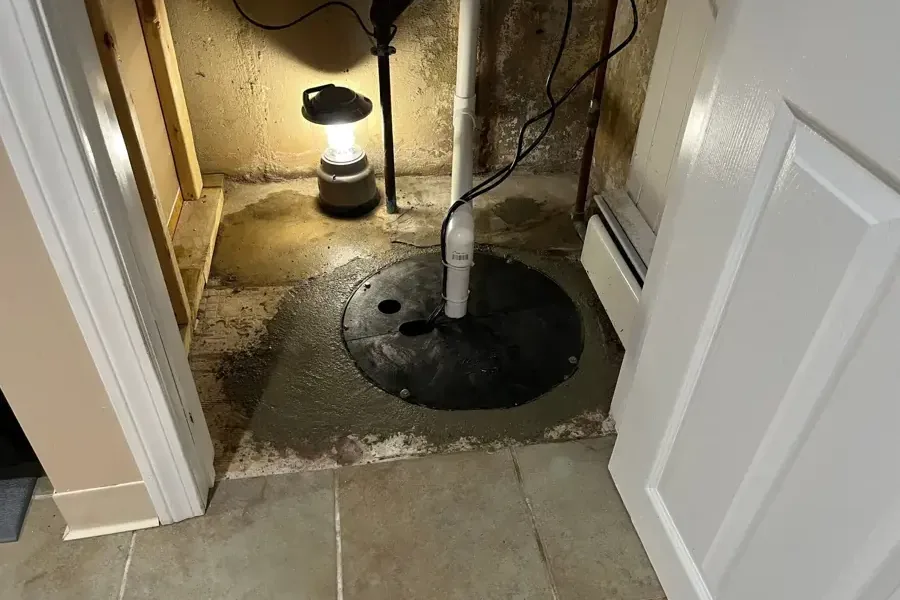
A sump pump keeps a basement dry, but where it sends the water matters as much as whether it runs. Danvers bars sump pumps from its sewer, and a pump that fails or was wired to the wrong place can leave a wet basement behind.
Key takeaways
- Danvers prohibits connecting a sump pump to the town sewer, with no grandfathering for older connections.
- A violation is punishable by a fine of $300 per day.
- Pump water belongs on the lawn, in a garden area or in a storm drain, never in the sewer.
- Extra water overloads the sewer and can push sewage into homes and businesses.
- The town will not disconnect a pump. The property owner has to reroute it.
What Danvers requires for sump pump discharge
The town Sewer Use Regulations are blunt. A sump pump may not be connected to the town sewer, and the town allows no grandfathering of connections that already exist.
A violation is punishable by a fine of $300 per day. The town says pump water must go onto the lawn, into a garden area or into a storm drain.
- No sump pump connection to the town sewer
- No exception for a pump connected years ago
- A fine of $300 per day for a violation
- Discharge to the lawn, a garden area or a storm drain instead
Why extra water in the sewer reaches basements
A sewer is sized for household wastewater, not for the steady flow of a pump working through a wet spring. The town says extra water from sump pumps overloads the system and can cause sewer pipes to overflow into homes and businesses.
Sewage from town flows to the treatment plant in Salem through the Doty Avenue Pump Station, because the town belongs to the South Essex Sewerage District. Every pump that adds water to that path adds to what the system must carry.
What an overloaded sewer looks like inside a house
The first sign is often a gurgling floor drain or a toilet that rises slowly. Water then appears at the lowest opening in the house, usually in the basement.
- Gurgling or slow floor drains
- Toilets and basement sinks that back up together
- Dark or gray water with a sour smell at the lowest drain
- Overflow most often during or after heavy rain
Where pump water is supposed to go
The town names three places: the lawn, a garden area or a storm drain. The pipe end should deliver water well away from the foundation, so it does not soak back into the same soil.
The discharge also needs an open path in every season. A hose that freezes solid or a buried outlet that clogs sends the water back to the pit, and the pit overflows.
- Check that the outlet runs freely in a heavy rain
- Keep leaves, ice and snow off the discharge opening
- Aim the water away from a neighbor wall as well as the house
- Never tie the pump into a floor drain, a sink drain or a toilet drain
The pre-sale inspection and how pumps end up misconnected
The town inspects homes before sale for sump pump status, and several have been found connected to the sewer. The town will not disconnect a pump for the owner, so the owner has to reroute it.
Plumbing in town falls under the Plumbing and Gas Inspector, who enforces the Massachusetts Fuel Gas and Plumbing Code, 248 CMR. A plumber should do any rerouting of a discharge pipe.
The owner can start by reading sump pump failure cleanup to see what a failed pump costs in damage.
- Check where the pump discharge pipe actually ends before a sale
- Ask a plumber to trace it if the path is unclear
- Reroute to the lawn, a garden area or a storm drain
- Keep a record of the change
How a pump ends up connected to the wrong place
A pump discharge can end up tied into a floor drain or a waste pipe during an old installation or a past renovation. A new owner may not know where the water goes until an inspector or a backup shows it.
The rule is about the connection itself, so how often the pump runs does not change where the water must go.
- A discharge pipe that runs into a floor drain or a utility sink drain
- A pipe that was tied into a waste pipe behind a finished wall
- A pump added after a past flood and never checked by a plumber
- A system sold with the house and never traced
Keeping a pump working through the wet season
A pump is only as reliable as its power, its float and its outlet. A quick test before the wet season is cheap next to a flooded basement.
Pour a bucket of water into the pit and watch the pump start, run and shut off.
- Confirm the float moves freely and is not stuck against the pit wall
- Make sure the check valve works so pumped water does not drain back
- Consider a battery backup for a power outage during a storm
- Clear the discharge opening of leaves and ice
What a failed sump pump leaves behind
When a pump fails, the pit fills and water rises over the basement floor. The town notes that groundwater seeps into basements when soil is saturated, which is why a pump is so common.
Clean groundwater is still a water loss. It soaks drywall at the bottom of the wall, carpet, stored boxes and the wood framing that sits on the slab.
The work is described under sump pump failure cleanup in Danvers.
What the crew does
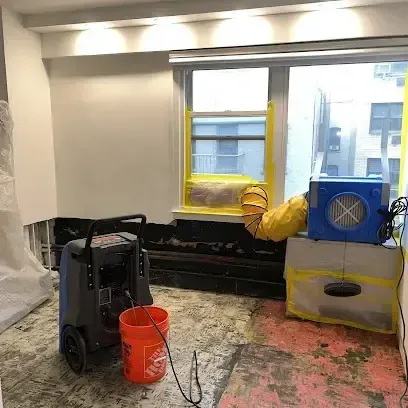
- Extracts standing water and checks the pit and pump
- Removes saturated carpet, pad and bottom drywall
- Dries the slab, sill and framing with dehumidifiers and air movers
- Logs moisture readings until the structure reads dry
When the water that comes up is sewage
If a basement drain or toilet overflows, the water is sewage until proven otherwise. It carries bacteria and is treated as Category 3 water from the start.
That means no wading in, no household vacuum and no salvage of porous items. Sewage backup cleanup covers how that work is handled, and the other water damage services listed here cover the rest of the basement.
- Keep children and pets out of the basement
- Stop using sinks, tubs and toilets that drain to the basement
- Photograph the water level and the damage
- Tell the Department of Public Works if the street or neighbors show the same problem
Questions
Can a sump pump drain into the sewer in Danvers?
No. The town prohibits it and allows no grandfathering, so even a connection made years ago is a violation.
What is the fine for a sump pump connected to the sewer?
A violation is punishable by a fine of $300 per day.
Will the town disconnect the pump?
No. The town will not disconnect a pump. The property owner has to reroute the discharge.
Where can sump pump water go instead?
Onto the lawn, into a garden area or into a storm drain.
Does the sewer rule apply if the pump only runs during storms?
The rule is about the connection, so how often the pump runs does not change where the water must go. It belongs on the lawn, in a garden area or in a storm drain.
Does a failed pump always mean sewage in the basement?
No. A failed pump usually means groundwater or rainwater. Sewage appears when the sewer itself backs up, shown by dark water and a sour smell at a floor drain or toilet.