Basement Flooding Cleanup in Danvers, MA
Groundwater finds its way into basements when the soil is saturated. Pump out, cleanup and drying are handled in order so the walls, floor and anything stored below get a real chance to recover.
(888) 629-3140Book a basement cleanup- Groundwater and storm entry
- Pump out and cleanup
- Walls and floors dried
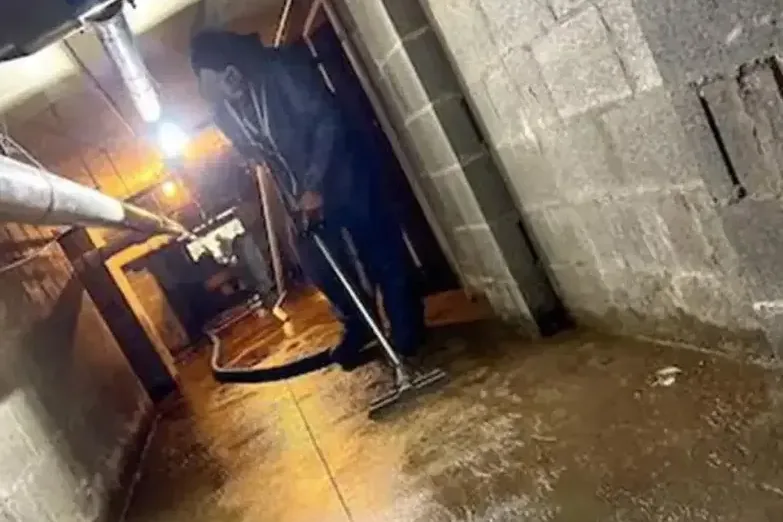
What to do first about basement flooding cleanup
- 1
Find the entry
Floor edge, pipe penetrations and window wells are checked first.
- 2
Pump it down
Pumps lower the water in stages while the pit is watched.
- 3
Strip what is wet
Soaked padding, carpet and low drywall go out the door.
- 4
Dry the shell
Dehumidifiers and air movers run until readings level off.
How basement flooding cleanup is handled, step by step
Each step follows the IICRC S500 drying standard, and the right-hand column is the record that step leaves in the claim file.
- 01InspectMoisture meters find wet walls, floors and cavities.Moisture map with the category and class
- 02ExtractStanding water leaves the basement through pumps and wands.Timestamped photos before anything is removed
- 03CleanSurfaces are washed and treated where the water came in dirty.Daily psychrometric and moisture log
- 04VerifyRepeat readings decide when equipment can leave.Final readings against a dry reference
What does basement flooding cleanup cost in Danvers, MA?
Basement flooding cleanup usually falls between $2,000 and $4,000 for an unfinished space with clean water. A finished basement runs $4,000 to $8,000, and storm or groundwater jobs can reach $12,000 or more.
Unfinished, clean water
$2,000 to $4,000
- Pump out and extraction
- Surface cleaning
- Fans and dehumidifier
Finished basement
$4,000 to $8,000
- Wall cavities opened
- Padding and carpet removed
- Longer drying run
Storm or groundwater
$8,000 to $12,000+
- Heavy water volume
- Sanitizing throughout
- Possible rebuild scope
These are typical ranges, never a quote. The category of water, the square footage, the material class and how fast drying started move the number most. The water damage cost calculator gives a closer planning range.
A flooded basement is rarely just a puddle. Water spreads under stud walls, soaks stored boxes and wicks up drywall, so the job starts with deciding what can be dried, what must be removed and what the water came from. Each answer changes the plan and the cost.
Why basements take on water
The town explains that groundwater seeps into basements when the soil is saturated, and that sump pumps are commonly used to remove it. After long rain or snowmelt the ground holds more than it can drain, and the lowest floor of the house takes the pressure. Water often enters at the floor edge, around pipes that pass through the wall and at window wells.
- Standing water is pumped out first, then the floor is extracted.
- Soaked carpet, padding and bottom drywall are cut out where needed.
- Wet vacuums finish low corners, stair bases and sump pits.
- Stored items are sorted into keep, clean and discard piles.
- Floors and walls are sanitized before drying equipment goes in.
Finished and unfinished basements differ
An unfinished basement often needs little more than extraction, cleaning and airflow. A finished one hides water behind paneling, insulation and flooring, so wall cavities are opened and tested. Insulation and carpet tack strips often need to come out too. The deeper the finish, the more moisture mapping matters.
Water in the basement right now? Describe the depth and what is stored below, and the crew plans the pump out.
Call about basement waterWhen the pump fails or water returns
A dead pump is its own problem, covered on the sump pump failure page, and wall drying is explained under structural drying. Once readings fall into the dry range, finish work can be planned.
Check the panel first
Basement water can reach outlets, the furnace and the electrical panel. Stay out of any standing water until power to that area has been checked by someone qualified. Gas appliances and water heaters sitting in the flood also need a look before restart.
Basement flooding cleanup across Danvers and nearby
Basement calls come from every village, including Burley's Corner, Ferncroft and Downtown Danvers, across ZIP codes 01923 and 01937, with Route 114 and Route 35 as the main ways in.
The same service nearby: basement flooding cleanup in Beverly, Peabody, Salem.
Related water damage services
Basement Flooding Cleanup questions, answered
What owners ask most about basement flooding cleanup, from drying time to the claim file.
Ask the drying team by phoneWhy does a basement flood after long rain?
Saturated soil pushes groundwater toward the lowest floor, and the town notes it seeps in when the ground can hold no more. Cracks, floor edges and window wells are the usual paths in.
Should the sump pump keep running during cleanup?
Yes, if it works. A running pump keeps the pit empty so water is not re-entering the floor. If it has failed, the sump pump failure page explains what comes next.
Can a finished basement be saved?
Often, yes, if the water was clean and reached early. Wet insulation, carpet and bottom drywall are usually removed, while framing, concrete and some flooring dry in place.
Is basement water ever sewage?
Sometimes. If a floor drain or toilet backed up, the water counts as contaminated and gets stricter handling. The sewage backup page covers that case.
What happens to boxes and belongings?
Items are lifted off the floor and sorted. Dry goods are kept, damp items are cleaned and dried, and soaked paper or cardboard is usually discarded.
Will insurance cover a flooded basement?
That depends on the policy and on whether the water came from a pipe, a sewer backup or the ground. Photos and readings taken during the cleanup help support the claim.
Get the basement pumped and dried
Tell the crew where water entered and what the floor is made of, then the plan comes together.