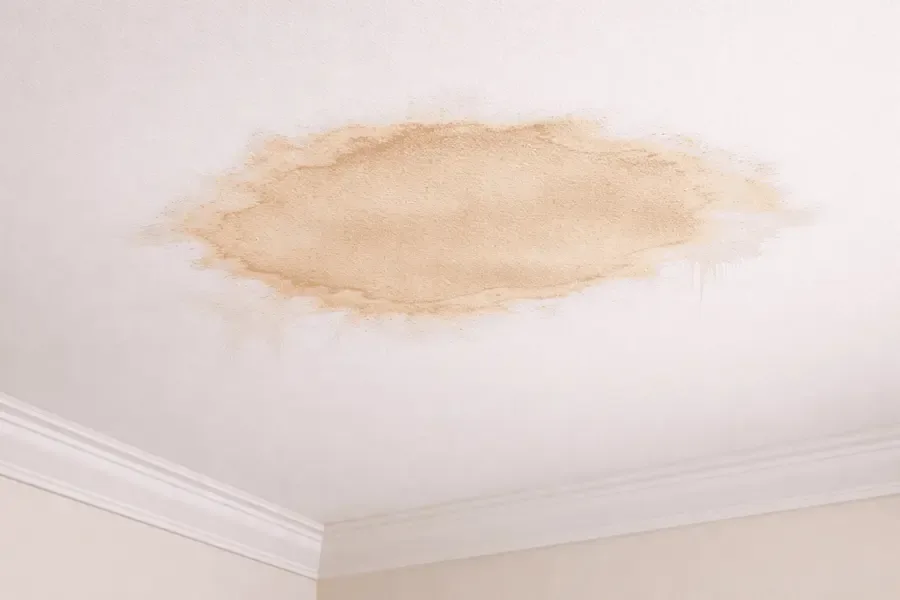
In a Salem building where one home sits over another, a leak upstairs becomes a ceiling problem downstairs. An older Census estimate puts about 38 percent of homes in buildings of 2 to 4 units, so the unit above is a fact of life for many households.
Key takeaways
- About 38 percent of homes are in buildings of 2 to 4 units, and about half of occupied homes are rented.
- The Point was rebuilt in brick and masonry after the 1914 fire as apartment buildings, row houses and multi-family homes.
- Stop the source first with a shutoff valve or the building main, then tell the unit above, the landlord and the insurer.
- A bulging ceiling holds water, so stay out from under it and leave it to the crew.
- Shared walls and floors are checked on both sides, and drying follows readings.
Why a leak from above is so common in older buildings
An older estimate puts about 38 percent of homes in buildings of 2 to 4 units, about 33 percent in single-unit buildings and about 17 percent in buildings of 20 or more units. The Census Bureau reports an owner-occupied rate of 49.7 percent for 2020 to 2024, so about half of occupied homes are rented.
The housing is also old. An older estimate says about 56 percent of units were built before 1939, and The Point was rebuilt in brick and masonry after the 1914 fire as apartment buildings, row houses and multi-family homes.
- Stacked units share floors and ceilings
- Many tenants and owners live under or over someone else
- Brick and plaster hold water and hide it well
- Dense blocks mean a leak can reach more than one neighbor
Where leaks from above usually start
Most leaks from a unit above begin with a fixture or an appliance rather than a roof. The water finds its way down through the floor and into the ceiling below.
Because the source is out of sight, the person below is often the first to notice. The stain can appear well away from the real leak.
- A tub or shower overflow or a failed seal around it
- A toilet supply that cracks or a wax ring that fails
- A washing machine hose or a dishwasher supply that lets go
- A water heater that leaks onto the floor
- A hidden supply or drain pipe in the floor or wall
What to do when the ceiling shows a stain
Right away
- Ask the unit above to shut off the fixture valve, or shut off the building main if no one answers
- Move furniture and belongings away from the wet area
- Put a bucket under any drip and keep people out from under a bulge
- Photograph the stain and its edges, then mark them with a pencil so growth is visible
Who to tell
- The unit above, so the source can be found
- The landlord or building manager, in writing
- The insurer, as early as the policy requires
- A restoration crew, so extraction and drying start
Why a sagging ceiling is a safety problem
Water adds weight. A plaster ceiling that is bulging can drop without warning, and light fixtures and wiring may sit in the wet cavity.
A trained crew opens it from the side, drains it in a controlled way and checks the wiring. An owner or tenant should stay clear.
The goal is to take the weight off the ceiling before it fails. Once the water is out, the crew can see how much plaster is wet and how far the joist bays are affected.
- Stay out of the room if the ceiling is bulging or cracking
- Do not poke or cut the plaster to drain it
- Turn off power to wet light fixtures and outlets only if the panel is dry
How the crew finds and dries the water
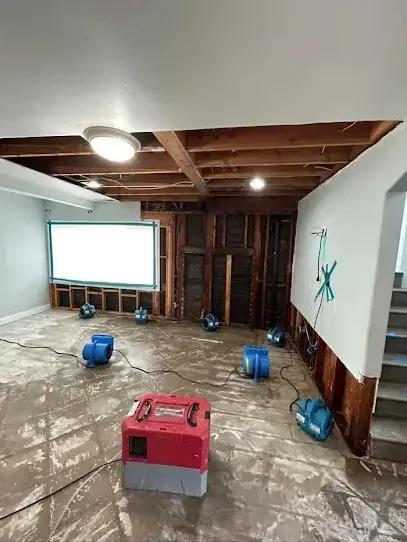
Moisture meters and a thermal check show how far the water traveled. The crew then opens the ceiling bays that are wet and extracts what it can.
The work follows ceiling leak cleanup for the damaged ceiling and appliance leak cleanup when the source was a hose or a supply. Structural drying then dries shared walls and floors, checking the unit above as well as the one below.
- Readings in the ceiling, the walls and the floor above
- Insulation and wet plaster removed when it cannot be dried
- Dehumidifiers and air movers set across both sides of the wall
- Daily logs showing the readings come down
Row houses, shared walls and the other side of the wall
In a row house or a dense block, a wall belongs to two homes. Water that enters one side can wick into the other, so checks cross the property boundary.
Brick and plaster hide moisture well. A wall that looks fine on one side may read wet on the other, which is why readings, not eyesight, set the scope.
Neighbors who cooperate early save time. Access to the unit above and the unit beside lets the crew find the source and dry both sides together.
- Readings taken on both sides of a shared wall
- The floor above and the ceiling below checked together
- Neighbors told early so access is ready
- Dehumidifiers placed where they dry both sides
Who pays, and how to keep the record
Responsibility depends on the cause, the lease and the policies involved. A renter policy usually covers belongings from a sudden leak, while the building policy covers the structure.
A clear paper trail helps everyone. Written notes, dated photographs and readings let the insurers sort out who is responsible.
Tenants should send questions to the landlord in writing, and owners should do the same with their insurer. Speed matters, because small leaks in shared floors often grow while people wait.
- Dated photographs of the stain and the source
- A list of damaged belongings
- Written messages to the landlord and the unit above
- Copies of the drying logs when the job is done
Questions
Who is responsible when a leak comes from the unit above?
It depends on the cause, the lease and the policies involved. A written record of the source, the dates and the damage helps everyone sort it out.
Should a bulging ceiling be popped to drain it?
Only a trained crew should open one. A sagging plaster ceiling can fall, and wiring may sit in the cavity. Trying it alone puts the person underneath at risk.
Can a wet ceiling dry without being opened?
Sometimes, if the leak was small and clean. Readings above the ceiling decide, since wet insulation and joists stay wet when only the surface looks fine.
Does renters insurance cover water damage from a neighbor?
Renters policies usually cover belongings damaged by a sudden leak. The building structure falls under the owner policy, so check the wording.
How is it known that a shared wall is dry?
Moisture meters read both sides of the wall and the framing between. The equipment stays until readings match dry reference levels, not until the surface looks fine.
What if the unit above is empty?
Tell the landlord or manager at once so the water can be shut off. A vacant unit can leak for a long time before anyone notices.