Ceiling Leak Water Damage in Danvers, MA
A stain or sag in the ceiling means water is already inside it. The source may be a roof, an upstairs bath or a pipe above, and cleanup starts by relieving the water safely.
(888) 629-3140Request ceiling help- Stains and sags
- Safe ceiling opening
- Framing dried
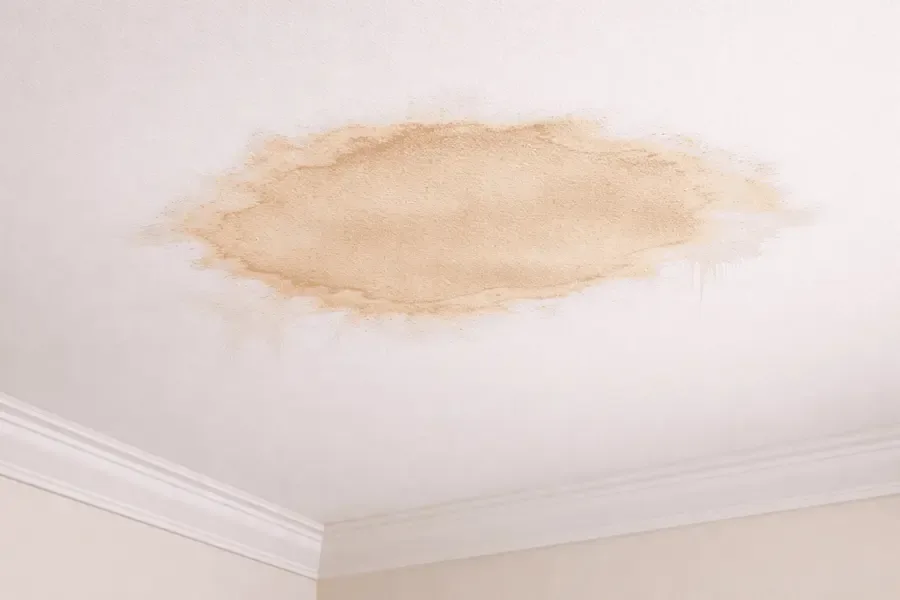
What to do first about ceiling leak water damage
- 1
Cut the power
Switch off circuits serving wet ceilings and lights.
- 2
Drain the sag
A small opening lets trapped water out into a bucket.
- 3
Open and inspect
Cut back to dry board and check joists and wiring.
- 4
Dry the cavity
Air movers and dehumidifiers run until readings level off.
How ceiling leak water damage is handled, step by step
Each step follows the IICRC S500 drying standard, and the right-hand column is the record that step leaves in the claim file.
- 01SourceThe origin is traced before repairs.Moisture map with the category and class
- 02ReleasePooled water drains through a controlled opening.Timestamped photos before anything is removed
- 03RemoveSoaked board and insulation leave the cavity.Daily psychrometric and moisture log
- 04DryReadings confirm joists and board are dry.Final readings against a dry reference
What does ceiling leak water damage cost in Danvers, MA?
A small stain over one bay usually costs $1,200 to $2,500. A room sized ceiling runs $2,500 to $5,000, and plaster damage across two floors can reach $7,500 or more.
Small stain, one bay
$1,200 to $2,500
- Spot drying
- Board section cut
- Insulation checked
Room-size ceiling
$2,500 to $5,000
- Full ceiling opened
- Joists dried in place
- New insulation
Plaster and two floors
$5,000 to $7,500+
- Plaster removal
- Floor below also wet
- Extended drying run
These are typical ranges, never a quote. The category of water, the square footage, the material class and how fast drying started move the number most. The water damage cost calculator gives a closer planning range.
A ceiling leak is the end of a path, not the start. Water travels along joists and pipes before it shows, so the wet spot on the ceiling can sit well away from where the water came in. Finding that path is what separates a lasting fix from a repeat stain.
Leaks from the unit or floor above
Danvers has about 11,405 housing units, and only about 56% are single unit detached homes, so many ceilings sit under another household's bath or kitchen. Danvers State Hospital closed in 1992, and its campus became an apartment complex in 2008, a reminder that stacked homes are part of the housing mix.
- Bulging sections are punctured gently to let trapped water drain.
- Wet drywall and plaster are cut back to dry material.
- Joists, insulation and wiring paths are checked for moisture.
- Fans and dehumidifiers dry the cavity before it is closed.
What a wet ceiling can hide
Behind a stain there may be soaked insulation, a wet light fixture box or a pipe that is still weeping. Lights and fans near the stain are a shock risk, so power to that circuit is switched off until the area has been checked. Only then is the ceiling opened.
Ceiling sagging or dripping? Keep clear of it, switch off the circuit if safe, and call to describe what is visible.
Discuss the sagging ceilingNext steps after the ceiling is dry
If the water came from a roof edge in winter, the ice dam page explains the pattern, and a plumbing source is covered under burst pipe work.
Do not paint over a stain
Paint hides a stain but not the water behind it. If the ceiling is still damp, the new coat will bubble, and the source will keep leaking into the cavity above.
Ceiling leak water damage across Danvers and nearby
Ceiling leak calls come from houses and apartment buildings in Danversport, Hathorne, Ferncroft, Tapleyville and Burley's Corner, in ZIP codes 01923 and 01937, near Route 35, Route 114 and Interstate 95.
The same service nearby: ceiling leak water damage in Beverly, Peabody, Salem.
Related water damage services
Ceiling Leak Water Damage questions, answered
What owners ask most about ceiling leak water damage, from drying time to the claim file.
Ask the drying team by phoneIs a brown ceiling stain an emergency?
A growing or sagging stain is. It means water is held in the ceiling, and the weight can bring it down. Keep people out from under it and call for help.
What if the leak starts in a neighbor's unit?
The cleanup is the same, but the repair and insurance questions involve both households and sometimes the building owner. Photos and moisture readings help sort out responsibility.
Can plaster ceilings be saved?
Small wet patches sometimes dry in place. Plaster that has softened, cracked or begun to sag usually has to come down, because it loses its bond to the lath.
Will opening the ceiling make a mess?
Some, but it is planned. Floors are covered, the opening is kept as small as the water allows, and debris is bagged as it comes down.
Do ceiling fans and lights need to stay off?
Yes, until the area is checked. Water inside a fixture box or along wiring is a shock risk, so the circuit stays off until the wet zone is dry.
How is the source found?
Meters and thermal imaging trace moisture upward along joists to the roof, fixture or pipe. A leak that stops and starts usually points to weather or an intermittent fixture.
Stop the drip and dry the ceiling
Say where the stain is and what is above it, and the crew plans the safest way in.