Structural Drying and Dehumidification in Danvers, MA
Pulling out standing water is only half the job. Moisture left in studs, subfloors and concrete keeps causing damage behind the walls, so air movers, dehumidifiers and repeat readings finish the work.
(888) 629-3140Set up drying service- Air movers placed
- Dehumidifiers run
- Readings logged
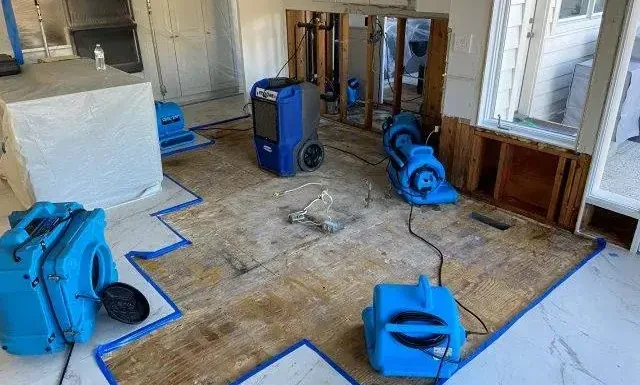
What to do first about structural drying and dehumidification
- 1
Map the moisture
Meters and cameras mark every wet area first.
- 2
Place the equipment
Air movers and dehumidifiers go where the readings point.
- 3
Open cavities
Small holes let dry air reach hidden framing.
- 4
Check and adjust
Equipment is moved as the readings change.
How structural drying and dehumidification is handled, step by step
Each step follows the IICRC S500 drying standard, and the right-hand column is the record that step leaves in the claim file.
- 01MeasureStarting readings set a reference for each material.Moisture map with the category and class
- 02PositionEquipment goes where the wet areas are.Timestamped photos before anything is removed
- 03MonitorRepeat readings track progress and steer changes.Daily psychrometric and moisture log
- 04FinishEquipment leaves once targets are met.Final readings against a dry reference
What does structural drying and dehumidification cost in Danvers, MA?
Drying one room at Class 1 or 2 usually costs $1,000 to $2,500. Several rooms run $2,500 to $5,000, and Class 4 materials such as hardwood or plaster can reach $8,000 or more.
Class 1 or 2, one room
$1,000 to $2,500
- Equipment set up
- Readings logged
- One room dried
Several rooms
$2,500 to $5,000
- Added equipment
- Wall cavities opened
- Repeat readings
Class 4 materials
$5,000 to $8,000+
- Dense materials dried
- Specialized drying
- Extended equipment run
These are typical ranges, never a quote. The category of water, the square footage, the material class and how fast drying started move the number most. The water damage cost calculator gives a closer planning range.
Wet materials can look dry long before they are. Drywall may feel normal while the stud behind it still holds water, and concrete can release moisture for a long time. Drying is done by measurement, not by guesswork. Every material gets its own target.
Why basements need careful drying
The town says groundwater seeps into basements when the soil is saturated, so basement walls and framing are a realistic drying job here. Foundation walls, sill plates and the bottoms of wall studs sit lowest and stay damp longest. That is why readings are taken at the base of every wall.
- Air movers push dry air across wet surfaces and into cavities.
- Dehumidifiers pull moisture out of the air so it does not return.
- Small holes in walls let warm dry air into closed cavities.
- Meters record each material until readings match a dry reference.
Material classes and drying effort
Drying jobs are sorted by how much wet material is involved and how slowly it releases water. Class 1 and 2 jobs involve thin or light materials. Class 4 jobs involve dense materials such as hardwood, plaster or concrete, which need more focused drying with specialized equipment.
Walls still damp after the water is gone? Call and describe what got wet, and a drying plan is built around the readings.
Discuss drying planConnected cleanup pages
Drying follows water removal, described on the water extraction page, and basement jobs lean on the basement flooding page.
Do not close walls early
Hiding wet framing behind new drywall locks moisture in. Walls should be closed only after readings show the studs and sheathing are dry, otherwise the damage returns.
Structural drying and dehumidification across Danvers and nearby
Drying equipment goes into homes and businesses across ZIP codes 01923 and 01937, including Danvers Center, Ferncroft and Putnamville, and along Route 1 and Route 114 wherever walls and framing stay wet.
The same service nearby: structural drying and dehumidification in Beverly, Peabody, Salem.
Related water damage services
Structural Drying and Dehumidification questions, answered
What owners ask most about structural drying and dehumidification, from drying time to the claim file.
Ask the drying team by phoneHow is drying different from just running fans?
Fans alone move damp air around. Dehumidifiers remove the moisture, and meters prove it worked. Without that measurement, wet framing can look dry while still holding water.
What do air movers and dehumidifiers actually do?
Air movers speed up evaporation from wet surfaces. Dehumidifiers collect the vapor so humidity does not climb. Together they pull moisture out of materials and out of the building.
Why are holes drilled in walls?
Small holes let dry air reach the cavity behind drywall or paneling. That reaches wet insulation and studs without tearing the whole wall out.
How is the structure confirmed dry?
Moisture readings are compared with an unaffected reference area of the same material. When the wet area matches the dry one, equipment can come out.
Can concrete and hardwood be dried too?
Often, yes, but they release water slowly and need focused equipment and repeat readings. Hardwood that has already cupped may still need sanding or replacement.
Does drying prevent mold?
Prompt drying cuts the damp conditions mold needs, which become a concern within the 24 to 48 hour window after a leak. Materials that stay wet beyond that need closer attention.
Get the structure dried and verified
Tell the crew which rooms were wet and what the walls are made of, and equipment is chosen to match.