Commercial Water Damage Lynn, MA
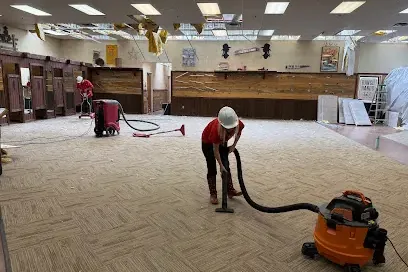
When water hits an office, shop, apartment building or industrial space, every day of business downtime costs money. Crews plan careful, phased extraction and drying that protect tenants, inventory and the building itself.
(888) 629-3140Call for commercial help- Offices and shops
- Apartment buildings
- Industrial space
What to do first about commercial water damage
- 1
Contain the loss
Shut off the source and isolate the wet suite.
- 2
Extract and protect
Water is removed and contents are covered.
- 3
Dry in phases
Each suite or floor gets its own equipment and readings.
- 4
Report
Logs and photos go to the manager and insurer.
How commercial water damage is handled, step by step
Each step follows the IICRC S500 drying standard, and the right-hand column is the record that step leaves in the claim file.
- 01SurveyMoisture maps cover every connected space.Moisture map with the category and class
- 02ContainBarriers keep dry areas in use.Timestamped photos before anything is removed
- 03DryEquipment is set per suite and monitored.Daily psychrometric and moisture log
- 04DocumentRecords are built for managers and insurers.Final readings against a dry reference
What does commercial water damage cost in Lynn, MA?
One suite with clean water costs $5,000 to $12,000, several suites or a whole floor cost $12,000 to $30,000, and Category 3 water or a whole building reaches $30,000 to $50,000+. Square footage and tenant access shape the plan.
One suite, clean water
$5,000 to $12,000
- Single tenant space
- Phased extraction
- Short drying run
Several suites or a floor
$12,000 to $30,000
- Multiple drying zones
- Containment barriers
- Regular readings
Category 3 or whole building
$30,000 to $50,000+
- Contaminated water handling
- Wide material removal
- Extended monitoring
These are typical ranges, never a quote. The category of water, the square footage, the material class and how fast drying started move the number most. The water damage cost calculator gives a closer planning range.
A commercial loss is bigger than a house loss in almost every way: more square footage, shared walls, tenants, inventory and records. The first call is usually to a property manager, and the plan has to balance drying against keeping the building usable.
Buildings that mix old and new
The city has the GE Aerospace jet engine plant, a North Shore Community College campus downtown, and former vacant industrial buildings that continue to be converted into loft apartments. Those conversions mix older structures with newer systems, so a leak can travel through unexpected paths.
- Shut off water to the affected suite or riser if you can
- Tell the property manager and tenants who share walls or floors
- Photograph inventory, equipment and finishes before moving them
- Keep a list of affected rooms for the insurance file
Roads, drains and main breaks
Commercial corridors take water from two directions: the pipes inside and the streets outside. The Lynnway flooded in 2017 and 2018, and WCVB reported multiple water main breaks there on December 15, 2019.
Each day a wet suite sits idle costs the business more. Reach a crew any hour for phased drying.
Book a commercial visitPhased drying and documentation
Crews dry one suite or floor at a time where possible, isolate the wet area with containment, and log readings per space. For work tied to a cause see burst pipe water damage and sewage backup cleanup.
Keep the business running
Plans are built around tenant hours, access routes and critical equipment, so the wet area is dried without shutting down the whole building.
Commercial water damage across Lynn and nearby
Commercial calls come from downtown offices and shops around Central Square and City Hall Square, converted lofts, industrial space along the Lynnway and South Harbor, in ZIP codes 01901, 01902, 01904 and 01905.
The same service nearby: commercial water damage in Beverly, Salem, Peabody.
Related water damage services
Commercial Water Damage questions, answered
What owners ask most about commercial water damage, from drying time to the claim file.
Ask the drying team by phoneCan a business stay open during water cleanup?
Often yes. Crews dry one suite or floor at a time, set up containment and plan around tenant hours, though a Category 3 loss or a major electrical hazard may require closing affected spaces.
Who coordinates with the insurer?
The owner or property manager files the claim. The restoration crew supplies photos, moisture readings, equipment logs and a written scope so the adjuster can verify the loss.
What happens to inventory and equipment?
Items are moved out of the wet area, lifted onto blocks or covered, and photographed first. Salvageable stock is separated from items that must be discarded, with a list for the claim.
How is a leak between apartments handled?
Both units are inspected and documented, and drying covers shared walls and the ceiling below. The owner and insurers decide responsibility, while the crew focuses on getting both units dry.
Does an old building change the drying plan?
Yes. Flat roofs, tar and gravel layers, plaster walls and converted industrial floors each hold water differently, so crews meter every layer instead of assuming one standard.
Business water loss? Start the phased plan
Give the crew the building type, the floors affected and the tenant situation, and the plan follows.