Water Extraction in Lynn, MA
When a street floods or a pipe lets go, water sinks into carpet, subfloors and the bottoms of walls quickly. Crews pump it out, pull ruined padding and wet drywall, and begin the drying plan.
(888) 629-3140Call to remove water- Pumps and extractors
- Padding and drywall
- Moisture checks
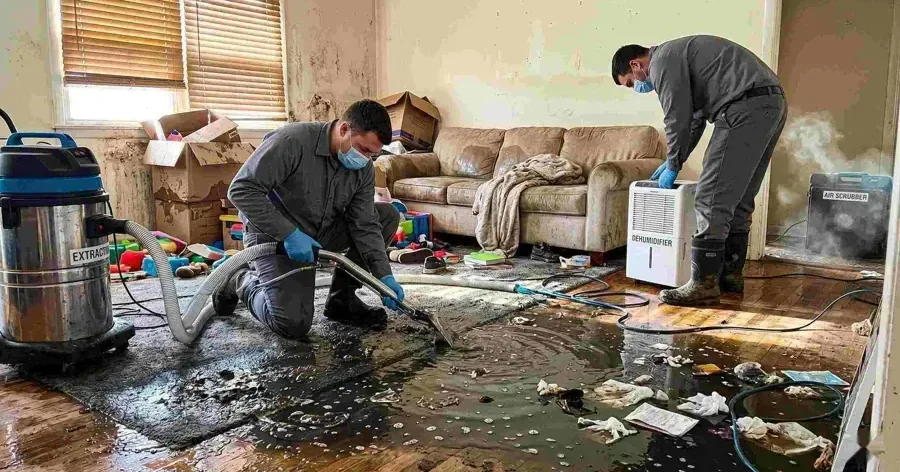
What to do first about water extraction and removal
- 1
Stop the water
Shut off the supply or block the entry point when safe.
- 2
Extract and remove
Extractors pull standing water and soaked padding is cut out.
- 3
Place drying gear
Air movers and dehumidifiers go in once the surfaces are exposed.
- 4
Check and record
Moisture readings and photos go into the file for your adjuster.
How water extraction and removal is handled, step by step
Each step follows the IICRC S500 drying standard, and the right-hand column is the record that step leaves in the claim file.
- 01InspectMoisture meters and a thermal camera map how far the water has spread.Moisture map with the category and class
- 02RemoveStanding water and unsalvageable padding and drywall leave the building.Timestamped photos before anything is removed
- 03DryEquipment runs with checks at set points until readings fall.Daily psychrometric and moisture log
- 04ReportThe final readings and photos are handed to the owner.Final readings against a dry reference
What does water extraction and removal cost in Lynn, MA?
Water extraction usually costs $600 to $3,500 for one area or a few rooms, and up to $7,000 when a whole floor or basement is involved. Contaminated water costs more because more material must be removed.
Small area, clean water
$600 to $1,500
- Single room affected
- Clean water source
- Short equipment run
Several rooms
$1,500 to $3,500
- Padding and drywall removed
- Longer equipment run
- Moisture checks logged
Whole floor or basement
$3,500 to $7,000
- Large pump setup
- Wall and floor removal
- Full structural drying
These are typical ranges, never a quote. The category of water, the square footage, the material class and how fast drying started move the number most. The water damage cost calculator gives a closer planning range.
Water extraction is the first job on almost any wet loss, because the longer water sits, the further it travels into drywall, trim and the layers under flooring. Crews size the pumps and extractors to the volume and the surfaces involved.
Flash floods and wet floors
Flash flooding on September 30, 2017 put more than 3 inches of rain on the area in less than 2 hours, closing the Lynnway and other main streets. Hurricane Florence's remnants brought more flash flooding on September 18, 2018. Basements and ground floors in low spots take on water quickly in events like these.
- Find the source and shut it off if water is still running
- Pump or extract standing water from every affected floor
- Cut out soaked padding and drywall that cannot be saved
- Log moisture readings so the drying plan has a baseline
Clean water versus contaminated water
Water from a supply pipe or a leaking tank is clean at first, but it picks up contaminants the longer it sits on building materials. Water that came in with storm runoff or up through a drain is treated as contaminated from the start, and porous materials it touched are removed instead of dried.
Water that stays put keeps moving into walls and subfloors. Call, any hour, and a crew will plan the extraction with you.
Lynn extraction helpWhat happens after the water is out
Pumping removes the bulk of the water, but wood, drywall and concrete stay wet underneath. Crews follow extraction with air movers, dehumidifiers and moisture readings so the structure dries completely rather than just looking dry. The structural drying plan sets equipment type and placement.
When to call a crew
Call once water spreads past one room, soaks drywall or rises through a drain. Early extraction usually means less material to remove. Related work is listed under water damage services in town.
Water extraction and removal across Lynn and nearby
Extraction crews work the whole city, from the Lynn Shore Drive waterfront and Wyoma Square to Pine Hill and Tower Hill, and across ZIP codes 01901, 01902, 01904 and 01905.
The same service nearby: water extraction and removal in Beverly, Salem, Peabody.
Related water damage services
Water Extraction and Removal questions, answered
What owners ask most about water extraction and removal, from drying time to the claim file.
Ask the drying team by phoneWhat happens during water extraction?
Crews remove standing water with pumps and extractors, then cut out padding and drywall that cannot be saved. Moisture readings taken afterward show where drying equipment should go.
Can carpet be saved after a flood?
Carpet from a clean water leak can often be extracted and dried in place, but the padding underneath is usually discarded. Carpet touched by sewage or storm runoff is removed.
How is extraction different from drying?
Extraction takes out the liquid water you can see. Drying then pulls out the moisture held inside wood, drywall and concrete, which takes separate equipment and repeated readings.
Is storm flood water treated differently?
Yes. Water that arrives with storm runoff may carry dirt and contaminants, so crews treat it as contaminated, wear protective gear and remove porous materials it reached.
Should I run a wet vacuum myself first?
A household wet vacuum helps with a small spill, but it cannot reach water under flooring or inside walls. Large losses need extractors and a moisture check before anything is closed up.
Will my insurance adjuster want the extraction records?
Yes. Photos, the removal log and moisture readings back up the claim, so the file is built as the work goes and handed over at sign off.
Standing water in your home needs to come out now
Describe the loss on the call and a crew will arrange pumps, extractors and a drying plan for the affected rooms.