Structural Drying and Dehumidification Manchester-by-the-Sea, MA
After tidal or brook flooding, framing and wall cavities in low spots near the harbor and Sawmill Brook hold moisture long after the water is gone. Drying brings those materials back to normal levels.
(888) 629-3140Call about drying the house- Moisture mapped daily
- Fans and dehumidifiers
- Readings until dry
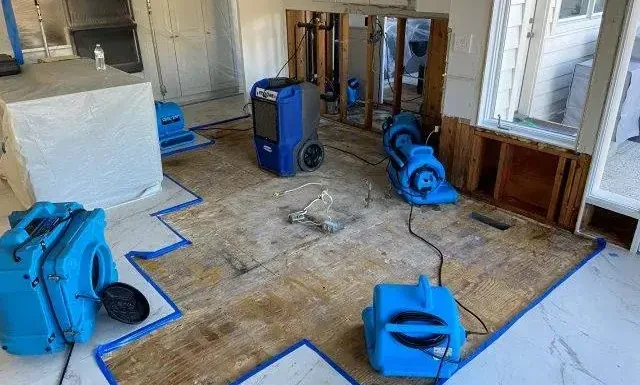
What to do first about structural drying and dehumidification
- 1
Map moisture
Meters and thermal imaging show where water is hiding.
- 2
Place equipment
Air movers and dehumidifiers are set for each room.
- 3
Read daily
Moisture readings are logged and compared.
- 4
Remove equipment
Fans leave only after dry targets are reached.
How structural drying and dehumidification is handled, step by step
Each step follows the IICRC S500 drying standard, and the right-hand column is the record that step leaves in the claim file.
- 01ClassifyMaterials and water type decide the setup.Moisture map with the category and class
- 02PlaceEquipment is arranged for airflow and humidity.Timestamped photos before anything is removed
- 03MonitorReadings are taken and logged daily.Daily psychrometric and moisture log
- 04ReleaseEquipment is removed once targets are met.Final readings against a dry reference
What does structural drying and dehumidification cost in Manchester-by-the-Sea, MA?
Structural drying in Manchester-by-the-Sea runs $1,000 to $2,500 for one room at Class 1 or 2, $2,500 to $5,000 for several rooms and $5,000 to $8,000+ when Class 4 materials need deep drying.
Class 1 or 2, one room
$1,000 to $2,500
- One room of equipment
- Standard dehumidifier
- Short monitoring period
Several rooms
$2,500 to $5,000
- More air movers
- Several dehumidifiers
- Daily readings
Class 4 materials
$5,000 to $8,000+
- Dense materials dried
- Specialty equipment
- Longer monitoring
These are typical ranges, never a quote. The category of water, the square footage, the material class and how fast drying started move the number most. The water damage cost calculator gives a closer planning range.
In Manchester-by-the-Sea, the harbor, Sawmill Brook and salty coastal air make drying a careful job. Extraction removes the visible water, but structural drying removes what is left inside the materials.
How the drying is set up
Technicians map the wet areas, classify the materials and place air movers to push air across surfaces. Dehumidifiers pull the released moisture out of the room so it cannot settle into other materials, and equipment is moved as readings change. The material classes in the price cards describe how stubborn the water is.
- Meters and thermal imaging map the wet materials
- Air movers are placed to cross every damp surface
- Dehumidifiers remove moisture from the room air
- Small holes may be drilled to reach hidden cavities
Low spots near the water
After tidal or brook flooding, the bottom of walls, sill plates and floor framing in low spots near the harbor and Sawmill Brook stay wet longest. These areas need extra readings, and insulation inside wall cavities may be removed so air can reach the framing. The storm flood page covers the cleanup before drying.
Moisture left in framing keeps causing damage after the surface looks dry, so drying should start once the water is out.
Ask a crew about dryingKnowing when it is dry
Readings from wet areas are compared with a dry reference material of the same type. Equipment comes out only when the numbers match, not when the surface feels dry.
No fixed schedule
Drying depends on materials, humidity and how deep the water went, so the crew follows meter readings rather than a set number of days.
Structural drying and dehumidification across Manchester-by-the-Sea and nearby
Drying crews serve 01944 from Downtown and the harbor shoreline to Norwood Avenue, Brook Street, Blue Heron Lane and the Route 128 area, wherever a low spot held water after a tide or storm.
The same service nearby: structural drying and dehumidification in Beverly, Danvers, Salem.
Related water damage services
Structural Drying and Dehumidification questions, answered
What owners ask most about structural drying and dehumidification, from drying time to the claim file.
Ask the drying team by phoneWhy is drying needed after the water is removed?
Framing, subfloors and drywall hold moisture that extraction cannot reach. Left alone, that moisture keeps damaging materials and can allow mold in the 24 to 48 hour window.
How long does structural drying take?
It depends on the materials, humidity and how far the water spread. The crew follows daily readings instead of a fixed schedule, and equipment stays until the targets are met.
What do the drying classes mean?
Classes describe how much water materials absorbed and how quickly it can leave. Class 1 or 2 is light to moderate, while Class 4 covers dense materials that hold water deeply.
Can the equipment be turned off early?
Shutting equipment down early leaves moisture in the framing. Readings show when it can stop, and the crew removes it once the targets are reached.
Will wall cavities need to be opened?
Sometimes. If insulation or framing stays wet, small openings are cut to let air reach it. Readings decide, and the openings are kept as small as possible. The size of each opening is noted in the job record.
Does drying apply after storm flooding?
Yes. It follows the removal and cleaning stage covered on the storm flood page, and it protects framing in low spots near the harbor and brook.
Dry the structure, not just the surface
Call now, any hour, and a crew will explain the equipment, the readings and the dry targets.