Appliance Leak Water Damage in Peabody, MA
Appliance leaks rarely announce themselves. A dishwasher, washer or supply hose can seep behind a cabinet for weeks, and cleanup traces the water, dries the floor and checks what is hidden underneath.
(888) 629-3140Report a leaking appliance now- Hose and supply leaks
- Cabinets and floors dried
- Hidden water found
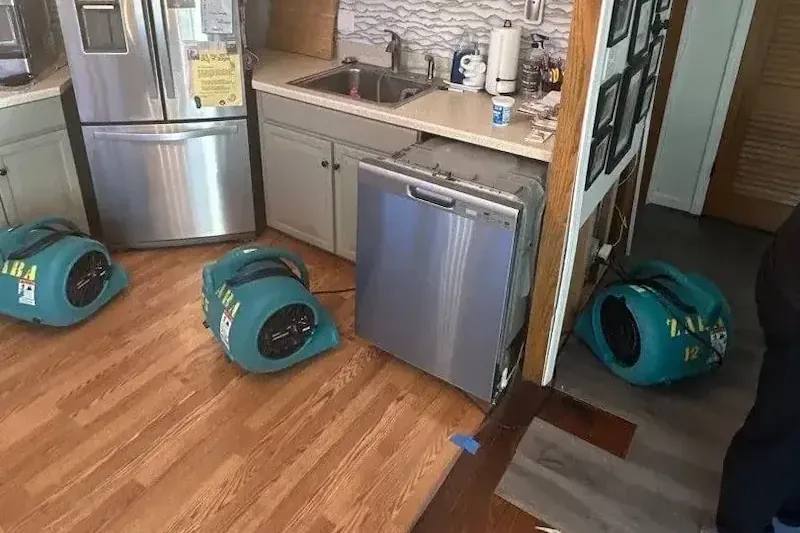
What to do first about appliance and supply hose leaks
- 1
Shut the valve
The appliance supply is closed and power is off.
- 2
Remove surface water
Floors and cabinet bases are extracted.
- 3
Open and check
Toe kicks and panels come off to reach hidden water.
- 4
Dry everything
Equipment runs until cabinets and subfloor read normal.
How appliance and supply hose leaks is handled, step by step
Each step follows the IICRC S500 drying standard, and the right-hand column is the record that step leaves in the claim file.
- 01LocateThe leaking hose or unit is identified.Moisture map with the category and class
- 02ExtractSurface water comes off the floor.Timestamped photos before anything is removed
- 03ProbeMeters check cabinets and subfloor.Daily psychrometric and moisture log
- 04DryEquipment runs until readings are normal.Final readings against a dry reference
What does appliance and supply hose leaks cost in Peabody, MA?
Appliance leak cost depends on how long the water seeped and how far it traveled. A leak caught early in one room is the smallest job, while water that reached the floor below costs much more.
Caught early, one room
$800 to $2,000
- One wet room
- Quick leak stop
- Surface drying
Under cabinets
$2,000 to $4,000
- Cabinet bases opened
- Subfloor dried
- Flooring replaced
Into the floor below
$4,000 to $6,000+
- Ceiling below wet
- Two levels dried
- Longer equipment run
These are typical ranges, never a quote. The category of water, the square footage, the material class and how fast drying started move the number most. The water damage cost calculator gives a closer planning range.
Household appliances connect to the plumbing through rubber hoses, valves and fittings that wear out. A small drip behind a unit can run for weeks, so the first sign is often a soft floor, a warped cabinet base or a musty smell.
Where appliance water goes
Water follows gravity and gaps. It runs under cabinets, along pipes into the subfloor and sometimes into the ceiling of the room below. With 22,315 households in the city, kitchens and laundry areas are everyday places where a quiet leak can start.
- Supply valve closed and the appliance unplugged
- Toe kicks and cabinet bases removed to reach trapped water
- Subfloor and rooms below checked with meters
- Warped or swollen materials replaced when needed
Hose leaks and why they fail
Supply hoses stiffen with age, and a split can release water at full supply pressure. Replacing old hoses and shutting valves during long trips are small steps that prevent the largest losses.
A leak behind an appliance keeps soaking cabinets and subfloor out of sight, so tracing it early limits the repair.
Call about a hose or unit leakLeaks that reach other units
A kitchen or laundry leak can drop into the apartment below, where the water is handled the way the ceiling leak page describes, so the neighbor and owner should hear about it early.
Unplug before cleanup
An appliance sitting in water should be unplugged only if the outlet and floor are dry, and otherwise the breaker should be shut off first.
Appliance and supply hose leaks across Peabody and nearby
Appliance leak calls come from ZIP codes 01960 and 01961, covering houses and apartments near downtown and Walnut Street, the Central Street corridor, South Peabody, West Peabody and the Proctor neighborhood.
The same service nearby: appliance and supply hose leaks in Beverly, Danvers, Lynn.
Related water damage services
Appliance and Supply Hose Leaks questions, answered
What owners ask most about appliance and supply hose leaks, from drying time to the claim file.
Ask the drying team by phoneWhich appliances leak most often?
Dishwashers, washing machines and refrigerator ice makers lead the list, along with the rubber supply hoses that connect them. Sink supply connections and condensate pans are also common sources.
How can a slow leak behind an appliance be found?
Spongy flooring, swollen cabinet panels, a musty odor or an unexplained rise in the water bill all point to a hidden leak. Moisture meters and thermal imaging confirm where the water is.
Do old hoses need to be replaced?
Rubber hoses stiffen and crack over time, and a split releases water at full pressure. Replacing aging hoses is a small cost compared with a flooded kitchen or laundry area.
Does the appliance need to be moved?
Often yes. Pulling a dishwasher or washer out lets the crew reach the wall, floor and supply connections behind it, and it prevents trapped water from staying under the unit.
Will insurance pay for a leaking appliance?
Sudden leaks are often covered differently from long term seepage, and the appliance itself is usually the owner's cost. Dated photos and drying logs support a claim for the resulting damage.
What if the water reached the room below?
Then both spaces are dried, and the lower ceiling is opened if water is trapped above it. The burst pipe page explains how water travels between floors.
Find the hidden water before the floor warps
The crew shuts the supply, removes surface water, opens cabinet bases and dries every layer, then confirms the result with meters.