Appliance Leak Water Damage Lynn, MA
A washer hose that splits or a dishwasher that seeps can soak cabinets and flooring for days before anyone notices. Crews find the wet area, extract the water and dry what the leak reached.
(888) 629-3140Lynn appliance leak help- Washer hoses
- Dishwasher leaks
- Refrigerator supply leaks
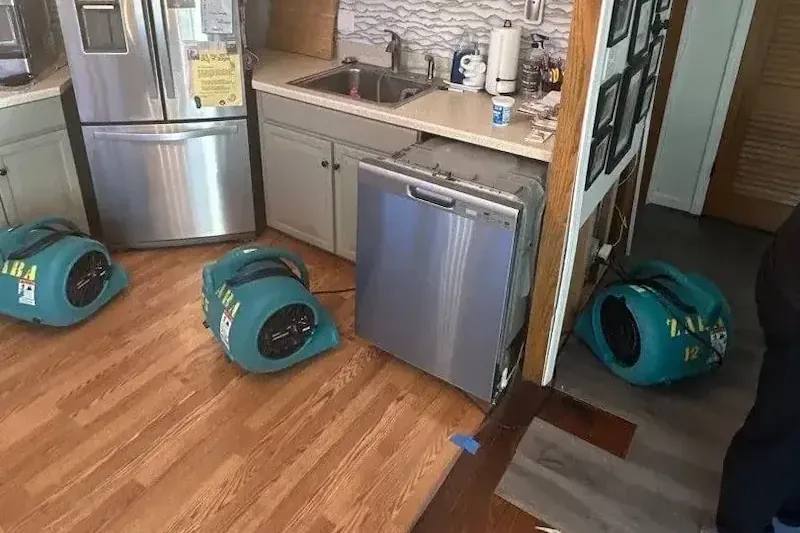
What to do first about appliance and supply hose leaks
- 1
Stop the appliance
Unplug it and close its shutoff valve if safe.
- 2
Pull and extract
Move the unit and extract water from the floor.
- 3
Open wet spots
Toe kicks and wet cabinet bases are removed as needed.
- 4
Dry and verify
Equipment runs until subfloor readings return to normal.
How appliance and supply hose leaks is handled, step by step
Each step follows the IICRC S500 drying standard, and the right-hand column is the record that step leaves in the claim file.
- 01FindMeters trace the leak path.Moisture map with the category and class
- 02ExtractWater is removed from floors and cabinets.Timestamped photos before anything is removed
- 03DryEquipment runs until readings fall.Daily psychrometric and moisture log
- 04ReportPhotos and readings support the claim.Final readings against a dry reference
What does appliance and supply hose leaks cost in Lynn, MA?
An appliance leak caught early in one room costs $800 to $2,000, water under cabinets costs $2,000 to $4,000, and a leak that reached the floor below runs $4,000 to $6,000+. Hidden spread decides the final figure.
Caught early, one room
$800 to $2,000
- Single area wet
- Quick extraction
- Short drying run
Under cabinets
$2,000 to $4,000
- Toe kicks removed
- Cabinet base checks
- Longer drying run
Into the floor below
$4,000 to $6,000+
- Ceiling below opened
- Subfloor drying
- Extended equipment run
These are typical ranges, never a quote. The category of water, the square footage, the material class and how fast drying started move the number most. The water damage cost calculator gives a closer planning range.
Appliance leaks are usually slow. A seep at a supply hose or a failing drain connection can wet the subfloor for days or weeks before a stain appears, which is why these losses spread farther than the puddle suggests.
Shared walls and floors
About 55% of the city's housing units are renter occupied, per a Census summary, so an appliance leak can easily reach a neighboring unit through a shared wall or the ceiling below. Tenants, owners and insurers each need clear documentation of where the water started.
- Pull the appliance plug if you can reach it dry
- Close the shutoff valve behind the washer or dishwasher
- Photograph the hose, the appliance and the wet floor
- Do not run the appliance again until it is checked
Under cabinets and behind units
Water from a dishwasher or refrigerator supply hose slips under cabinet bases and toe kicks, where it soaks particleboard and the subfloor out of sight. Crews pull the toe kicks, meter the cabinet bases and open only the sections that read wet, so the kitchen stays as intact as possible.
A leaking appliance keeps wetting the subfloor even after the puddle is wiped up. Reach a crew any hour to find and dry the spread.
Book appliance leak cleanupFixing the cause
A plumber or appliance technician fixes the hose or the unit. For tank leaks see water heater leak cleanup, and for ceiling stains below see ceiling leak water damage.
Check the hose age
Braided supply hoses can burst without warning once they are old. Replacing them is a cheap fix, and shutting the valve when the unit is not in use limits the damage if one fails.
Appliance and supply hose leaks across Lynn and nearby
Appliance leak calls come from rental units, loft conversions and older houses around Pine Hill, Veteran's Village, The Commons and Tower Hill, within ZIP codes 01901, 01902, 01904 and 01905.
The same service nearby: appliance and supply hose leaks in Beverly, Salem, Peabody.
Related water damage services
Appliance and Supply Hose Leaks questions, answered
What owners ask most about appliance and supply hose leaks, from drying time to the claim file.
Ask the drying team by phoneWhich appliances leak most often?
Washing machines, dishwashers and refrigerators with ice makers top the list, mainly through supply hoses, drain connections and door seals. Water heaters and air conditioner drains also leak.
How do I know water is under my floor?
Warped or cupped boards, soft spots, a musty smell and cabinet bases that swell are common signs. A moisture meter confirms it, since hardwood and vinyl hide wet subfloors well.
Is a slow leak covered by insurance?
Sudden discharge is usually covered, while damage from a leak that went on for a long time may be excluded. Dated photos and moisture readings help show when the loss began.
What if the leak reached my neighbor?
Document both units, tell the building owner and your carrier, and keep the crew's records. Responsibility depends on the lease and the cause, which insurers sort out.
Can I use the appliance again after a leak?
Not until the hose, valve or seal is repaired and the area is dry. Running a leaking unit again can soak the subfloor a second time and restart the drying.
Do cabinets have to be replaced?
Solid wood bases can often dry in place, while particleboard swells and crumbles once soaked. Crews meter each cabinet and remove only the ones that read wet and have lost strength.
Appliance leak? Get the floor and cabinets checked
Name the appliance and the room, and say whether neighbors below are affected, and the crew will plan the drying.