Ice Dam Water Damage in Peabody, MA
When snow melts and refreezes at the roof edge, the trapped meltwater backs up under shingles and runs into ceilings, walls and insulation. Cleanup dries those areas and checks what the attic is hiding.
(888) 629-3140Call about winter roof leaks- Ceilings and walls dried
- Wet insulation removed
- Attic checked
What to do first about ice dam water damage
- 1
Protect the room
Buckets and plastic catch drips while the ceiling is checked.
- 2
Find the wet areas
Meters and thermal imaging map the ceiling and attic.
- 3
Remove wet material
Soaked insulation and soft drywall come out.
- 4
Dry the space
Dehumidifiers run until readings return to normal.
How ice dam water damage is handled, step by step
Each step follows the IICRC S500 drying standard, and the right-hand column is the record that step leaves in the claim file.
- 01InspectAttic and ceiling moisture is mapped.Moisture map with the category and class
- 02RemoveWet insulation and damaged drywall are taken out.Timestamped photos before anything is removed
- 03DryAir movers and dehumidifiers run in the cavities.Daily psychrometric and moisture log
- 04VerifyMeters confirm the ceiling and framing are dry.Final readings against a dry reference
What does ice dam water damage cost in Peabody, MA?
Ice dam cost depends on how many rooms sit under the leak and whether the attic insulation is soaked. An early stain in one room costs far less than meltwater that reached two floors.
One room, early stain
$1,500 to $3,000
- One ceiling affected
- Small insulation removal
- Short drying run
Several top floor rooms
$3,000 to $6,000
- Ceilings and walls wet
- Attic insulation removed
- Several dehumidifiers
Attic and two floors
$6,000 to $9,000+
- Water through two levels
- Heavy insulation loss
- Extended drying
These are typical ranges, never a quote. The category of water, the square footage, the material class and how fast drying started move the number most. The water damage cost calculator gives a closer planning range.
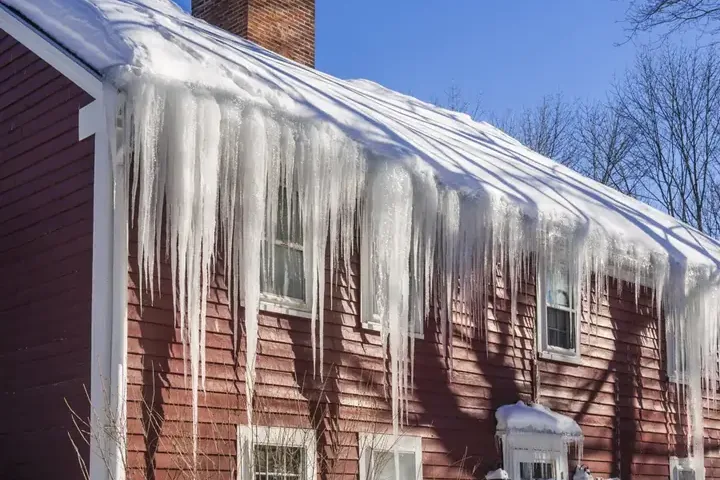
An ice dam forms when heat escaping from the house melts snow on the roof and the water refreezes at the cold eaves. The ridge of ice blocks drainage, and the pooled meltwater finds its way under shingles and into the house.
Where ice dam water ends up
Meltwater runs down the inside of exterior walls, soaks attic insulation and stains ceilings along the edges of rooms. Insulation that stays wet loses its value and keeps moisture against the framing, so it is usually removed rather than left to dry.
- Attic and ceiling checked with meters and thermal imaging
- Wet insulation bagged and removed
- Ceiling and wall cavities opened where needed
- Dehumidifiers set until framing reads normal
A New England winter problem
Ice dams are a regional winter issue across New England rather than a local event, so the general pattern is what matters here. Houses that leak heat into the attic are the ones most likely to grow ice at the eaves, and the median home here was built around 1966, which makes attic insulation and sealing worth a look.
Meltwater already inside the ceiling keeps spreading through insulation and drywall, so drying should start before the stain grows.
Call about a roof edge leakClearing the roof is a separate job
Removing snow or ice from the roof belongs to a roofer, and a roof repair stops the next leak. The restoration crew handles the water that already got inside, using structural drying once the surfaces are open.
Stay off the roof
Chipping ice from a roof edge can damage shingles and cause falls, so ladder work and ice removal are best left to professionals.
Ice dam water damage across Peabody and nearby
Ice dam calls come from ZIP codes 01960 and 01961, including West Peabody, South Peabody, the Proctor neighborhood, the Crystal Lake area and the 1800s houses of the Washington Street Historic District.
The same service nearby: ice dam water damage in Beverly, Danvers, Lynn.
Related water damage services
Ice Dam Water Damage questions, answered
What owners ask most about ice dam water damage, from drying time to the claim file.
Ask the drying team by phoneWhat causes an ice dam?
Warm air from the living space melts roof snow, and the runoff freezes again where the roof is cold. The resulting ridge holds back later meltwater until it backs up under shingles.
Will the ceiling stain go away?
A stain does not fade until the moisture source is fixed and the area is dry. Light marks can be sealed and painted, while sagging or crumbling drywall has to be replaced.
Is wet attic insulation worth saving?
Fiberglass can sometimes dry if it is lightly damp, but compressed or soaked insulation stays wet and no longer insulates. Cellulose that got wet usually has to be removed.
Can ice dam damage lead to anything else?
Moisture trapped in the ceiling or wall can stain finishes and encourage mold within 24 to 48 hours if it is not dried, which is why the cavity is opened and checked.
Who handles the roof side of the problem?
A roofer deals with snow, ice, flashing and shingles, and an insulation contractor addresses attic heat loss. The restoration crew covers the water that reached the living space, as outlined on the ceiling leak page.
Does a heavy snow winter mean more leaks?
More snow gives more meltwater, and repeated freeze and thaw cycles keep the ice ridge growing. Even so, house heat loss decides whether a dam forms, so two neighboring roofs can behave very differently.
Dry the ceiling and attic before the next thaw
The crew protects the room, finds every wet spot, removes soaked insulation and gets the cavity down to normal readings.