Structural Drying in Peabody, MA
Once standing water is gone, the building still holds moisture in framing, subfloors and walls. Drying equipment and meters bring those materials back to normal, a step that decides whether repairs last.
(888) 629-3140Call about wet framing and floors- Airflow and dehumidifiers
- Meter tracked progress
- Verified dry finish
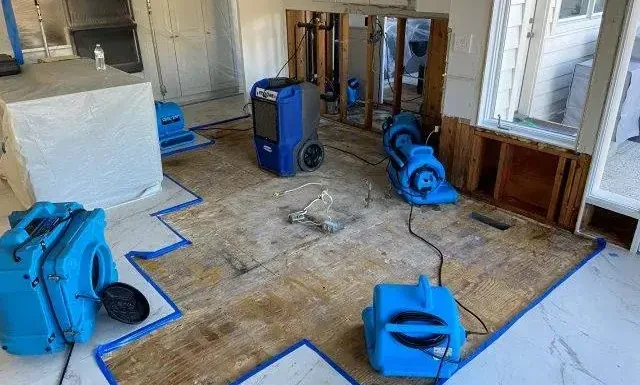
What to do first about structural drying and dehumidification
- 1
Set the baseline
Meters record how wet each material is before drying.
- 2
Place equipment
Air movers and dehumidifiers are set by room.
- 3
Check progress
Meters are read again and equipment is adjusted.
- 4
Confirm dry
Final readings must match normal levels.
How structural drying and dehumidification is handled, step by step
Each step follows the IICRC S500 drying standard, and the right-hand column is the record that step leaves in the claim file.
- 01MeasureMoisture is mapped in every wet material.Moisture map with the category and class
- 02EquipAirflow and dehumidification are matched to the space.Timestamped photos before anything is removed
- 03MonitorReadings drive changes in equipment.Daily psychrometric and moisture log
- 04ReleaseGear comes out once materials test dry.Final readings against a dry reference
What does structural drying and dehumidification cost in Peabody, MA?
Drying cost follows the number of rooms, the type of material and how long equipment has to run. Light, surface level moisture costs the least, while dense materials that hold water deeply cost the most.
Class 1 or 2, one room
$1,000 to $2,500
- One room dried
- Standard equipment
- Short run
Several rooms
$2,500 to $5,000
- Water in many rooms
- More equipment
- Meters at each stage
Class 4 materials
$5,000 to $8,000+
- Hardwood or plaster
- Specialty drying
- Longest run
These are typical ranges, never a quote. The category of water, the square footage, the material class and how fast drying started move the number most. The water damage cost calculator gives a closer planning range.
Extraction removes the water that can be pumped, but wood, drywall and concrete hold moisture inside the material itself. Structural drying uses airflow and dehumidification to pull that trapped moisture out until readings match a dry reference.
How drying equipment works
Air movers push dry air across wet surfaces, which lets moisture leave the material. Dehumidifiers then pull that moisture out of the air so it cannot settle somewhere else. The rooms are kept closed, and the equipment is adjusted as meters show which materials are drying and which are not.
- Air movers aimed along walls and across floors
- Dehumidifiers sized to the volume of the wet space
- Wall cavities opened or vented to release trapped moisture
- Meters read at each visit to track progress
Which materials dry slowly
Class 1 or 2 losses involve porous, thin or lightly wet materials that dry quickly with ordinary equipment. Class 4 materials such as hardwood, plaster and concrete hold water deeply and need specialty drying that runs longer. Choosing the right setup is what separates a finished job from a callback.
Materials that look dry can still hold moisture inside, so drying should continue until meters confirm normal readings.
Call about wet framingLocal wet weather and older homes
The downtown square has a record of wet weather flooding, and the median home was built around 1966, so meters are used to confirm what is really dry rather than what only feels dry.
Leave equipment running
Switching drying equipment off early leaves wet cores behind walls and floors, so it should stay on until the crew confirms the final readings.
Structural drying and dehumidification across Peabody and nearby
Structural drying work covers ZIP codes 01960 and 01961, including houses and shops around downtown, South Peabody, West Peabody, the Proctor neighborhood and the business areas near Centennial Park and the Northshore Mall.
The same service nearby: structural drying and dehumidification in Beverly, Danvers, Lynn.
Related water damage services
Structural Drying and Dehumidification questions, answered
What owners ask most about structural drying and dehumidification, from drying time to the claim file.
Ask the drying team by phoneHow long does drying take?
It depends on the material, the amount of water and the equipment, so no fixed number applies. Meters decide when the structure is dry, not a calendar.
Why are dehumidifiers needed as well as fans?
Fans move moisture off surfaces into the air, and dehumidifiers remove it from the air. Without dehumidifiers the moisture would settle back onto walls and ceilings and the drying would stall.
Can a house be lived in while drying?
Often yes, though the equipment is loud and uses a lot of power. Rooms with sewage or storm water contamination should stay empty until cleanup is complete.
What is the difference between extraction and drying?
One takes out liquid water, and the other takes out moisture held inside materials. The two work as a pair, and the water extraction page covers the first half.
Can floors and walls be dried without removing them?
Often, when the water was clean and caught early. Injected or vented air can dry wall cavities and floors from within, while sewage or long standing water usually requires removal first.
Does hardwood flooring have to be replaced?
Not always. Hardwood can often be saved with specialty drying mats that pull moisture through the boards, as long as the water was clean and the process starts early. Cupped boards that stay wet may need to be replaced.
Finish the job with proof that it is dry
Equipment is placed by room, adjusted as readings change and removed only after final meter checks show the structure has returned to normal.