Peabody Square has a long record of water trouble. In mid-May 2006 days of heavy rain flooded the downtown around the square, and business owners were pumping water out of their own stores.
Key takeaways
- Areas of the square were notorious for flooding in the decade before 2017, especially around Foster Street and Walnut Street.
- Drainage work along the North River is meant to reduce flooding in the square, but in January 2017 the mayor said flooding issues had not ended.
- Safety and power come first, then stock, then extraction and drying.
- Photographs, an inventory list and moisture readings support the insurance file.
- A business owner should ask the insurer early whether the policy covers lost income during a closure.
Why the downtown keeps flooding
Flooding around the square was notorious in the decade before 2017, particularly near Foster Street and Walnut Street. In mid-May 2006 the downtown around the square flooded after days of heavy rain.
A state capital budget describes phase 2 of a flood control mitigation plan to improve drainage along the North River in downtown Peabody. The plan is meant to reduce how often the square floods.
Each source describes a different slice of the problem: a one-off storm, a long-running drainage weak spot and a plan to ease it. Together they show why storefronts near the square plan for water.
In January 2017 the mayor credited the Scouting Woods retention pond and upkeep of culverts and catch basins with getting the city through heavy rain, high tide and saturated ground without flooding. The mayor also said flooding issues had not ended.
The first steps for a storefront or office
The first hour of a flood is a scramble, and the order of the steps matters. Safety comes first, because water and electricity share many storefronts.
Protect people and power
- Do not enter if the water is deep, moving or touching outlets and equipment
- Shut off power to the wet area at the panel only if the panel is dry and reachable
- Keep staff and customers out of rooms with sagging ceilings
- Turn off the water supply if a pipe is the source
Protect stock and records
- Lift inventory, files and electronics onto shelves or counters
- Photograph the water marks and the stock before moving anything
- Start a written inventory of what was wet
- Keep damaged goods until the insurer has seen them
What the extraction crew does in a commercial space
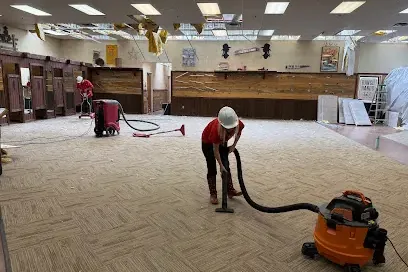
Commercial floors are large, and water spreads under counters, shelving and display fixtures. The crew pulls standing water with extractors sized to the room, then removes wet floor coverings that cannot be dried in place.
Foot traffic spreads contamination, so staff and customers stay out of the wet area while the crew works. Fans and hoses are placed to protect the dry parts of the building.
The work for a shop or office follows the steps under commercial water damage restoration in Peabody, and the first stage is water extraction.
- Standing water extracted from open floor and from under fixtures
- Wet carpet, pad and loose flooring lifted and removed
- Baseboards and bottom drywall opened where water wicked up
- Stock and furniture moved so no wet area is missed
Drying storefront floors, walls and back rooms
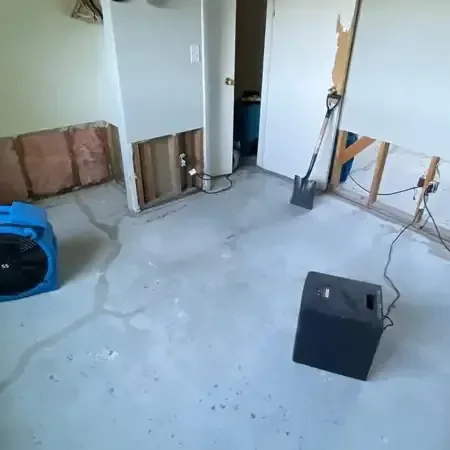
Water wicks up baseboards and drywall, and it settles in the wall cavity behind shelving. A storefront can look dry in the front while the back room and the wall bases are still wet.
Dehumidifiers and air movers run until moisture readings on the floor, the walls and the framing fall to dry levels. Work can sometimes be staged so part of a space reopens while the rest dries.
A shop that reopens too soon risks trapping moisture under new flooring or paint. The crew sets the finish date by the readings, then the repairs follow.
Where hidden water collects
- Behind cabinets, counters and wall shelving
- Under raised flooring and in floor seams
- Inside walls shared with the next tenant
- In storerooms and basements below the shop floor
What the readings show
Daily readings show whether drying is on track or the equipment needs to move. The job ends when the numbers say it ends.
Common storefront materials and what happens to them
Different materials react differently to a flood. The crew sorts them by whether they can be cleaned and dried or have to go.
Stock matters too. Paper goods, packaging and fabric that sat in the water are usually lost, while hard goods can often be cleaned.
- Carpet tile and glued carpet: usually lifted and discarded
- Vinyl and laminate: often lifted so the subfloor can dry
- Painted drywall: cut out at the wet base and replaced
- Metal shelving and hard fixtures: cleaned and dried in place
Records for the insurer and the landlord
A tenant should tell the landlord quickly, since building systems and shared walls may be involved. A written trail helps if the policies of the tenant and the owner both come into play.
A business policy may include income protection, and flood is often excluded or sold separately. The insurer can say which parts of the loss are covered, and the commercial water damage page shows what a typical job file includes.
- Dated photographs of the damage and the source
- An inventory list with approximate values
- Receipts for pumping, supplies and temporary storage
- Notes on who was told and when
Getting ready before the next heavy rain
A downtown business cannot stop a storm, but a few habits shorten the cleanup. Most of them cost little.
After the water drops, a short written note on what worked and what did not helps the next time. It also gives the insurer a clear picture if the building floods again.
- Keep stock and paperwork off the floor in the lowest rooms
- Know where the main water valve and the electrical panel are
- Keep catch basins near the entrance clear of leaves and trash
- Keep a list of numbers for the landlord, the insurer and the crew
Questions
How often has Peabody Square flooded?
Reports describe areas of the square as notorious for flooding in the decade before 2017 and a downtown flood in May 2006. No exact count is available.
What is the North River drainage project?
A state capital budget describes phase 2 of a flood control mitigation plan to improve drainage along the North River downtown, meant to reduce flooding in the square.
Should a business owner pump out the store alone?
Owners did pump their own stores in May 2006, but standing water can hide electrical hazards and contamination. Cut the power first, and use proper equipment or a crew. Pumping alone also leaves the walls and floor structure wet.
Does business insurance cover lost income after a flood?
Some policies include business interruption cover, and many exclude flood. The policy wording decides, so ask the insurer early.
Who should be told first when a shop floods?
The landlord or building manager, the insurer and then the crew. A written note with the time and a photograph of the water source starts the record, and the crew adds readings as the drying goes on.
What should be photographed after a flood?
Water marks on walls, damaged stock and equipment, flooring, ceiling stains and the source of the water, all with dates.