Water Extraction in Peabody, MA
Pumps and extractors remove standing water from flooded rooms, then moisture meters check the floors and walls beneath it. Downtown flooding in May 2006 shows why standing water is a real concern in this city.
(888) 629-3140Send a pump out crew- Pump and extractor removal
- Carpet and floor water
- Moisture checked after
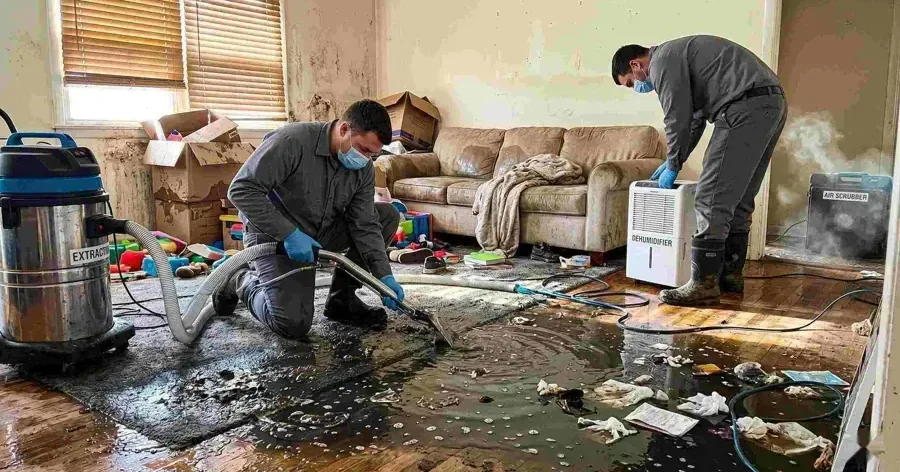
What to do first about water extraction and removal
- 1
Find the water
Standing areas and hidden pockets are located before pumping starts.
- 2
Pump out the bulk
Submersible pumps clear deep water from low spots.
- 3
Extract the surface
Wand tools lift water from carpet, pad and hard floors.
- 4
Check what remains
Meters show moisture left in walls and subfloor.
How water extraction and removal is handled, step by step
Each step follows the IICRC S500 drying standard, and the right-hand column is the record that step leaves in the claim file.
- 01AssessMeters and a thermal camera show the wet area and the water type.Moisture map with the category and class
- 02RemovePumps and extractors take out standing water and soaked pad.Timestamped photos before anything is removed
- 03SortWet contents are lifted, set aside or marked for disposal.Daily psychrometric and moisture log
- 04Hand offReadings pass to the drying plan for the remaining moisture.Final readings against a dry reference
What does water extraction and removal cost in Peabody, MA?
Extraction pricing follows the size of the wet area and how deep the water is, with three common ranges shown below. Dirty or storm water raises the total because removal and sanitizing are added.
Small area, clean water
$600 to $1,500
- One room
- Clean source
- Surface water only
Several rooms
$1,500 to $3,500
- Water in several rooms
- Pad and baseboards checked
- Pump and extractor work
Whole floor or basement
$3,500 to $7,000
- Deep or widespread water
- Heavy pumping first
- Dry out plan needed
These are typical ranges, never a quote. The category of water, the square footage, the material class and how fast drying started move the number most. The water damage cost calculator gives a closer planning range.
Standing water is the first problem on a flooded floor, and the longer it sits, the deeper it moves into carpet pad, baseboards and the subfloor below. Wood, drywall and insulation keep absorbing for as long as water touches them. Extraction pulls out the bulk of that water so structural drying can work on the framing instead of the puddles.
How standing water gets removed
Submersible pumps clear deep water first, then truck mounted or portable extractors work across carpet and hard floors with wands that lift moisture from the surface and the pad. Rooms are worked from the lowest point outward so water is not pushed back into dry areas. Furniture legs, appliance bases and cabinet toe kicks are checked for trapped pools that a first pass can miss.
- Submersible pumps for water deeper than a few inches
- Extractor wands for carpet, pad and hard floors
- Moisture meters to find water the wand cannot reach
- Containers and floor protection for salvageable contents
What extraction leaves behind
Even a thorough pass leaves moisture inside baseboards, wall bottoms and the subfloor, so meters and a thermal camera map what remains. Wet carpet pad is usually removed because it holds water like a sponge, while the carpet itself can often be lifted, cleaned and dried if the water was clean.
Standing water keeps soaking into the structure the longer it sits, so the pumps are best started early.
Call for water pump outWhy standing water is a local concern
Downtown flooding in May 2006 sent business owners pumping water out of their stores, and later drainage planning for the North River was aimed at reducing how often that happens. The same pattern applies to houses, where water that reaches a lower level or a first floor needs to be removed before it climbs into wall cavities.
Safety before pumping
Water near outlets, extension cords or the electrical panel is a shock risk, so power to wet areas should be shut off by someone who can reach the breaker safely.
Water extraction and removal across Peabody and nearby
Extraction calls cover ZIP codes 01960 and 01961, from downtown streets near Foster Street and Walnut Street to the Central Street corridor, West Peabody, South Peabody and the area around the Northshore Mall.
The same service nearby: water extraction and removal in Beverly, Danvers, Lynn.
Related water damage services
Water Extraction and Removal questions, answered
What owners ask most about water extraction and removal, from drying time to the claim file.
Ask the drying team by phoneHow is extraction different from drying?
Extraction removes liquid water with pumps and extractors, while drying uses air movers and dehumidifiers to pull moisture out of materials that stay wet afterward. Both are needed, in that order.
Can wet carpet be saved?
Often yes, when the water was clean and the carpet is lifted and cleaned promptly. The pad underneath is usually replaced, and carpet from a sewage or storm water loss is generally discarded.
How deep does water have to be for pumping?
Pumps handle anything deep enough to submerge their intake, and the remaining thin film is then taken up by extractors. Even shallow spills spread under baseboards, so depth alone does not decide the work.
Why does the water type matter?
Clean water from a supply pipe can usually be dried in place, while storm water and sewage carry contaminants. Those losses add sanitizing and removal of porous materials, as described on the storm flood cleanup page.
What should be moved before the crew starts?
Small furniture, rugs, electronics and papers should be lifted onto dry surfaces if that is safe. Heavy items and anything near wet outlets should stay put until the area is checked.
Is a wet vacuum enough?
A household wet vacuum clears small spills but cannot reach water held in padding, baseboards and subfloors. When water has spread across a room, powered extractors and meters are the safer route.
Get the water out of the building before it settles into the framing
Extraction and drying are scheduled together, so the same call that starts the pumps also sets up the meters and equipment for what comes next.