Water Extraction in Danvers, MA
When rain or a failed fixture leaves water standing on the floor, extraction comes first. Pumps and truck mounted units pull the bulk out so drying can start on the wet materials underneath.
(888) 629-3140Request water removal- Pumps and extractors
- Floors and basements
- Moisture checked after
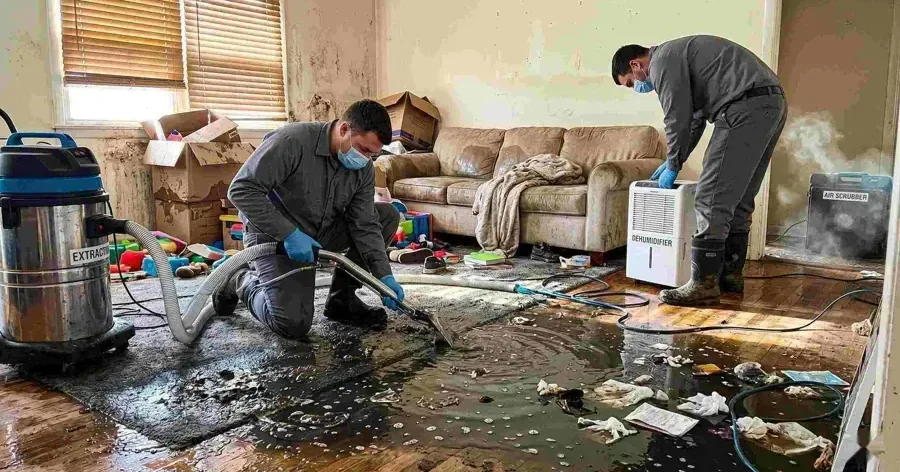
What to do first about water extraction and removal
- 1
Stop the source
Shut the supply or seal the opening feeding the water.
- 2
Pump the bulk
Submersible pumps clear anything deep enough to move.
- 3
Extract the rest
Wands and vacuums lift water from carpet, padding and corners.
- 4
Hand off to drying
Readings show which materials still hold moisture.
How water extraction and removal is handled, step by step
Each step follows the IICRC S500 drying standard, and the right-hand column is the record that step leaves in the claim file.
- 01SurveyMoisture readings map the wet floors, walls and cabinets.Moisture map with the category and class
- 02ExtractPumps and wands remove standing water in a planned order.Timestamped photos before anything is removed
- 03ProtectFurniture is lifted, blocked or moved out of the wet zone.Daily psychrometric and moisture log
- 04DocumentReadings and photos are logged for the drying stage and insurance.Final readings against a dry reference
What does water extraction and removal cost in Danvers, MA?
Water extraction usually runs from $600 to $1,500 for a small clean water spill and climbs with the area covered. A whole floor or flooded basement is the top of the range, as shown on the cards.
Small area, clean water
$600 to $1,500
- Single room affected
- Clean supply water source
- Wet vacuum extraction
Several rooms
$1,500 to $3,500
- Truck mounted extractor unit
- Carpet padding lifted out
- Baseboards and walls checked
Whole floor or basement
$3,500 to $7,000
- Submersible pumps running
- Subfloor moisture mapped
- Drying equipment placed
These are typical ranges, never a quote. The category of water, the square footage, the material class and how fast drying started move the number most. The water damage cost calculator gives a closer planning range.
Extraction is the first physical job on a wet property. The longer water sits, the deeper it travels into drywall, padding and framing, so the aim is to pull out the bulk of it and hand the drying stage a clean start. Pumping begins at the deepest point and works outward.
Why rain and runoff matter here
Heavy rain has put water on Route 1 and nearby streets more than once, including the flash floods of October 4, 2011, and July 28, 2014. The town sits among the Porter, Crane and Waters rivers, which feed the tidal Danvers River, so wet ground and rising water are familiar worries.
- Submersible pumps clear the deepest standing water first, before anything is lifted.
- Weighted extractors draw water out of carpet and padding.
- Wet vacuums reach corners, stairs and low spots.
- Moisture meters confirm what still holds water.
What gets pulled out and what stays
Clean supply water is the simplest case. Water that has crossed a dirty floor, or come in from outside, is treated with more caution and more cleaning. Carpet padding is often removed because it holds water like a sponge, while hardwood, tile and framing can usually be saved when they are reached early. Rugs, boxes and low furniture are lifted out of the water so they stop wicking it upward.
Water standing in the house? Call and describe the room and the depth, and the pump out plan starts from that.
Discuss pump outHow extraction leads into drying and repair
After the pump out, structural drying takes over, and a pipe failure behind the water is covered on the burst pipe page. Readings are logged room by room.
Do not wait for it to dry
Open windows and fans rarely beat a flooded floor. Standing water left in place keeps soaking baseboards and subfloors, which turns a simple pump out into a larger repair.
Water extraction and removal across Danvers and nearby
Crews work across ZIP codes 01923 and 01937, from Danvers Center and Danversport to Hathorne, Tapleyville and Putnamville, along Route 1, Route 114 and the Interstate 95 corridor, plus homes off Route 35 and Route 62.
The same service nearby: water extraction and removal in Beverly, Peabody, Salem.
Related water damage services
Water Extraction and Removal questions, answered
What owners ask most about water extraction and removal, from drying time to the claim file.
Ask the drying team by phoneWhy does standing water need to come out early?
Water keeps spreading into drywall, padding and framing the longer it sits. Removing the bulk early limits how much material gets wet, which keeps the repair smaller and the drying stage simpler.
Can a wet carpet be saved after extraction?
Often the carpet can, but the padding rarely can. Clean water caught early lets carpet be lifted, cleaned and dried in place. Water from outside or a dirty source usually means the carpet goes with the pad.
What is the difference between extraction and drying?
Extraction removes liquid water with pumps and extractors. Drying then pulls the moisture that soaked into wood, drywall and concrete, using air movement and dehumidifiers.
Does extraction work for basement water too?
Yes, basements are a common job. Submersible pumps handle depth, then wands and vacuums finish the floor. For a basement that keeps refilling, the basement flooding page covers the groundwater side.
What should be moved before extraction begins?
Lift small items, rugs and electronics off the floor if the area is safe. Leave the electrical panel alone, and stay out of standing water near outlets or running appliances.
When is it safe to turn the power back on?
Only after the wet area has been checked. Water near outlets, cords or appliances is an electrical risk, so an electrician decides when circuits are safe to use again.
Get standing water out before it spreads
Describe what is wet, how deep it is and where it started. Equipment and order of work are chosen from that.