Basement Flooding Cleanup in Peabody, MA
Rain that overwhelms drains and saturated ground can push water into any lower level. Pumping, drying and sanitizing are planned together so finished rooms and stored belongings lose less to the water.
(888) 629-3140Call about a flooded lower level- Rain and storm water
- Finished or unfinished
- Pumped and dried
What to do first about basement flooding cleanup
- 1
Confirm power is off
Nobody enters until outlets and equipment are safe.
- 2
Pump it out
Water is removed from the lowest point first.
- 3
Clear the wet
Soaked carpet, pad and damaged drywall come out.
- 4
Dry and clean
Surfaces are treated and equipment runs until readings drop.
How basement flooding cleanup is handled, step by step
Each step follows the IICRC S500 drying standard, and the right-hand column is the record that step leaves in the claim file.
- 01InspectMeters check floors, walls and framing for hidden moisture.Moisture map with the category and class
- 02PumpStanding water is pulled out of the lower level.Timestamped photos before anything is removed
- 03CleanHard surfaces are washed and treated for storm water.Daily psychrometric and moisture log
- 04DryEquipment runs until framing and floors test normal.Final readings against a dry reference
What does basement flooding cleanup cost in Peabody, MA?
Most basement jobs fall into three bands, based on whether the space is finished and whether the water was clean or came from a storm. Water that sat for several days moves a job toward the top band.
Unfinished, clean water
$2,000 to $4,000
- Bare floor and walls
- Clean source
- Pump and dry
Finished basement
$4,000 to $8,000
- Carpet and drywall removal
- Framing dried
- Contents moved
Storm or rising water
$8,000 to $12,000+
- Soil and debris cleanup
- Sanitizing required
- Longer drying
These are typical ranges, never a quote. The category of water, the square footage, the material class and how fast drying started move the number most. The water damage cost calculator gives a closer planning range.
A flooded lower level is more than a wet floor. Water soaks drywall, wood framing and stored belongings from the bottom up, and storm water arrives with soil and bacteria that turn a cleanup into a sanitizing job as well as a drying job. The earlier the water comes out, the more of the finish materials can stay.
How a flooded lower level is cleared
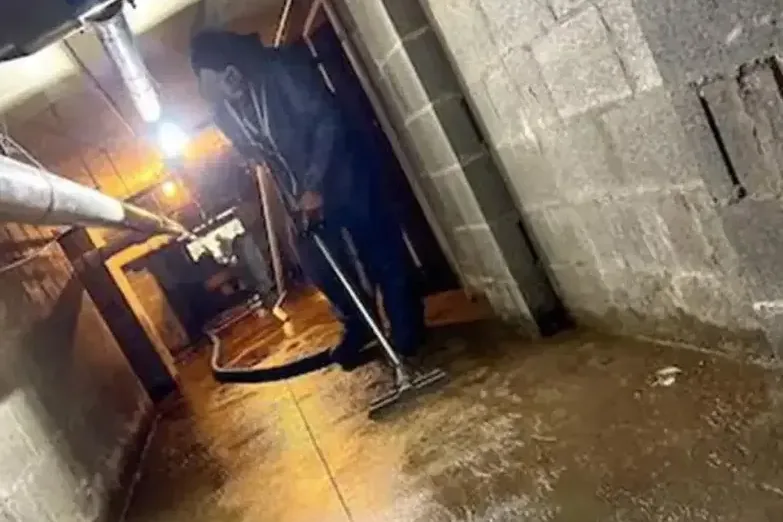
Pumps remove the standing water, then crews pull up soaked carpet and pad, cut drywall above the water mark if wicking has started, and move stored items to a dry area. Hard surfaces are washed and treated before drying equipment is set. Sump pumps and floor drains are checked so refilling does not undo the work.
- Water pumped out before cleanup starts
- Carpet, pad and wet drywall removed when needed
- Hard surfaces washed and treated for storm water
- Fans and dehumidifiers set once the area is clear
Heavy rain and saturated ground
In January 2017 the city stayed dry through heavy rain, high tide and saturated ground, which the mayor credited to the Scouting Woods retention pond and culvert and catch basin maintenance. The mayor also cautioned that flooding issues were not over, so a wet lower level is never something to wait on.
Water sitting in a lower level soaks deeper into framing and storage, so the pumps should start early.
Call for a basement pump outStored belongings and finished rooms
Cardboard boxes, upholstered pieces and particleboard furniture absorb water quickly and are often lost, while solid wood, glass and metal can usually be cleaned and kept. Finished rooms need more care because paneling and insulation hide wet spots behind them. Photos and papers can sometimes be dried flat by a specialist.
Do not enter flooded areas
Water over outlets or the furnace can energize the floor, so entering a flooded lower level before the power is confirmed off is a shock risk.
Basement flooding cleanup across Peabody and nearby
Lower level flooding calls come from all of Peabody, including the areas near the Waters River and Crystal Lake, the Washington Street Historic District and the neighborhoods of South Peabody and West Peabody.
The same service nearby: basement flooding cleanup in Beverly, Danvers, Lynn.
Related water damage services
Basement Flooding Cleanup questions, answered
What owners ask most about basement flooding cleanup, from drying time to the claim file.
Ask the drying team by phoneWhat is the first step after a basement floods?
Stay out until the power is confirmed off, stop any water source that can be controlled, and call for pumping. Entering standing water around outlets or a furnace creates a shock risk.
Can a finished basement be saved?
Often, when the water was clean and removal starts early. Carpet pad and the lower section of drywall usually come out, while framing and concrete are dried in place with fans and dehumidifiers.
Is storm water different from a pipe leak?
Yes. Storm water carries soil, bacteria and debris, so surfaces are washed and sanitized, and porous materials are removed. Pipe water is usually clean at the source and dries in place more often.
Does a failed pump change the cleanup?
The cleanup is the same, but the cause matters for what happens next. A pump that stopped needs to be checked for power, float and discharge, as covered on the sump pump failure page.
Why does wet drywall have to be cut out?
Drywall wicks water upward and holds it against the framing, which keeps the wall wet from the inside. Cutting it back to dry material lets the cavity open to air and equipment.
Which belongings can usually be kept?
Hard items such as solid wood furniture, glassware and metal tools can generally be washed and kept. Soft or pressed wood items soak up contaminants from storm water and are usually let go.
Stop the flooding from spreading to finished rooms
One call starts pumping, safety checks and a drying plan for the whole lower level, including stored items and finished walls.