Water Heater Leak Cleanup Lynn, MA
A tank that cracks or a fitting that lets go can empty its whole load onto the floor. Crews extract the water, check the walls and flooring around the unit and dry the area until readings are normal.
(888) 629-3140Fix a heater leak- Leaking tank
- Failed fitting
- Slow drip damage
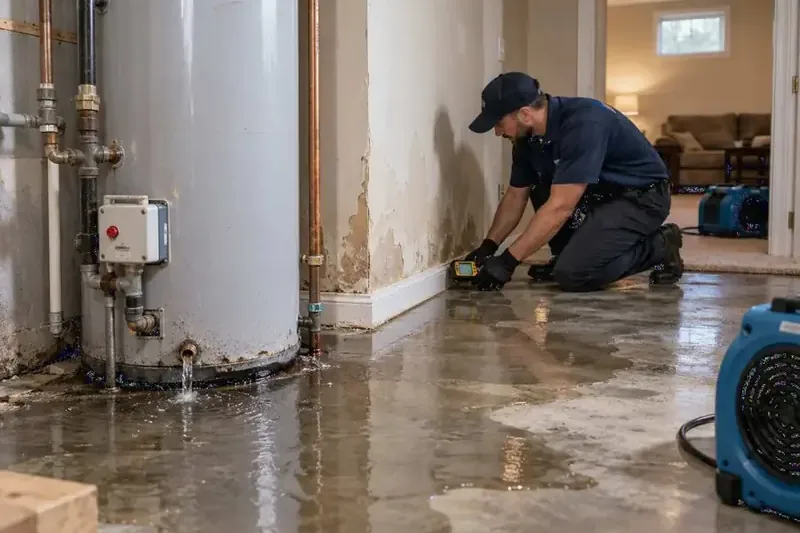
What to do first about water heater leak cleanup
- 1
Shut off supply
Close the cold valve and cut power to the unit.
- 2
Extract the water
Wet vacuums and extractors clear the floor.
- 3
Remove soaked parts
Wet baseboards and drywall near the unit come out.
- 4
Dry the area
Air movers and dehumidifiers run until readings clear.
How water heater leak cleanup is handled, step by step
Each step follows the IICRC S500 drying standard, and the right-hand column is the record that step leaves in the claim file.
- 01InspectMeters check the floor and wall bases.Moisture map with the category and class
- 02ExtractWater is removed and the area cleaned.Timestamped photos before anything is removed
- 03DryEquipment runs on walls and subfloor.Daily psychrometric and moisture log
- 04ReportPhotos and readings join the claim file.Final readings against a dry reference
What does water heater leak cleanup cost in Lynn, MA?
A heater leak in an unfinished basement costs $1,000 to $2,500, a finished space costs $2,500 to $4,500, and an upper floor unit reaches $4,500 to $6,000+. Water in finished rooms and ceilings below adds removal work.
Unfinished basement
$1,000 to $2,500
- Slab and stored items
- Short extraction
- Brief drying run
Finished space
$2,500 to $4,500
- Drywall and flooring
- Baseboards removed
- Longer drying run
Upper floor heater
$4,500 to $6,000+
- Ceiling below opened
- Insulation replaced
- Extended drying
These are typical ranges, never a quote. The category of water, the square footage, the material class and how fast drying started move the number most. The water damage cost calculator gives a closer planning range.
A water heater leak ranges from a slow drip at a fitting to a split tank that releases everything at once. Either way the water spreads under the unit, into the walls beside it and, in upper floor installations, through the floor below.
Basements, closets and upper floors
Heaters usually sit in a basement, utility closet or upper floor mechanical space, and the damage depends on which. A basement unit wets the slab and stored items, a closet unit wets drywall and flooring, and an upper floor unit sends water into the ceiling below.
- Close the cold supply valve above the tank and turn off its power
- Do not touch wet wiring or outlets near the leak
- Photograph the tank label, the leak and the wet floor
- Call a crew to extract the water and check the walls
Walls and floors around the unit
Water from a heater runs along the slab or subfloor until it finds a low spot or a gap, so wet drywall and baseboards often extend past the visible puddle. Crews meter the surfaces beside and behind the unit, then remove only what the readings show is saturated.
A leaking tank keeps releasing water until the supply is shut. Reach a crew any hour to plan the extraction and drying.
Plan heater leak cleanupReplacement and drying are separate jobs
A plumber replaces or repairs the heater, and the restoration crew dries the space. Related work includes appliance leak water damage and basement flooding cleanup.
Old tank, new leak
A tank that weeps rust or pools water at its base is near the end of its life. Catching the first seep keeps a small cleanup from becoming a flooded floor.
Water heater leak cleanup across Lynn and nearby
Heater leaks come from basement utility areas and upper floor closets alike, in homes and apartments around The Brickyard, Lynnhurst, South Harbor and The Commons, within ZIP codes 01901, 01902, 01904 and 01905.
The same service nearby: water heater leak cleanup in Beverly, Salem, Peabody.
Related water damage services
Water Heater Leak Cleanup questions, answered
What owners ask most about water heater leak cleanup, from drying time to the claim file.
Ask the drying team by phoneWhy do water heaters leak?
Tanks corrode from the inside over time, and fittings, relief valves and drain valves can also loosen or fail. A leak at the base usually points to a failing tank.
Is water heater water clean?
It starts as clean supply water, but it picks up dust and debris from floors and can carry sediment from the tank. Water that sits on porous materials is handled with care.
Will insurance pay for a heater leak?
A sudden failure is often covered for the water damage, while the heater itself is usually not. Slow leaks over a long period may be excluded, so photos and dates help.
Do I need to replace the whole heater?
That is a plumber's call. A failing tank is normally replaced, while a loose fitting or valve can sometimes be repaired. The cleanup does not depend on which choice is made.
Can a heater in a closet damage walls?
Yes. Water wicks into the drywall and baseboards around a closet, and doors and trim hold moisture. Crews meter the surrounding walls and open them only where readings are high.
Should I drain the tank myself?
Draining is a plumber's task, but shutting the cold supply valve above the tank and cutting its power is safe for most homeowners and limits the damage while help is on the way.
Heater leaking? Get the floor dried
Tell the crew where the heater sits and how far the water ran, and the cleanup will cover the walls and floors around it.