Structural Drying Lynn, MA
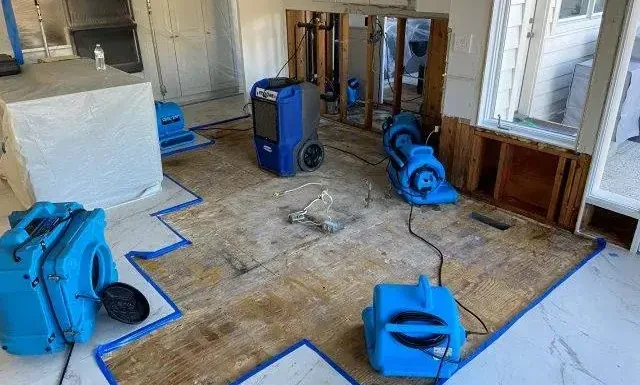
Removing the water is only half the job. Air movers, dehumidifiers and moisture readings pull the rest out of wood, drywall and concrete so walls and floors can be closed up without hidden dampness.
(888) 629-3140Start structural drying- Air movers
- Dehumidifiers
- Moisture mapping
What to do first about structural drying and dehumidification
- 1
Map the moisture
Meters and thermal images mark every wet material.
- 2
Set the equipment
Air movers and dehumidifiers match the room and materials.
- 3
Monitor and adjust
Readings are taken on a schedule and gear is moved.
- 4
Confirm dry
Equipment leaves after readings match the reference.
How structural drying and dehumidification is handled, step by step
Each step follows the IICRC S500 drying standard, and the right-hand column is the record that step leaves in the claim file.
- 01MapMoisture readings set the starting point.Moisture map with the category and class
- 02EquipDehumidifiers and air movers are sized to the space.Timestamped photos before anything is removed
- 03MonitorReadings are logged and equipment adjusted.Daily psychrometric and moisture log
- 04ReleaseGear leaves once materials meet the standard.Final readings against a dry reference
What does structural drying and dehumidification cost in Lynn, MA?
Class 1 or 2 drying in one room costs $1,000 to $2,500, several rooms cost $2,500 to $5,000, and Class 4 materials such as deep hardwood or concrete reach $5,000 to $8,000+.
Class 1 or 2, one room
$1,000 to $2,500
- Few wet materials
- Modest equipment
- Short monitoring
Several rooms
$2,500 to $5,000
- Multiple drying zones
- More equipment
- Regular readings
Class 4 materials
$5,000 to $8,000+
- Dense material drying
- Specialty equipment
- Extended monitoring
These are typical ranges, never a quote. The category of water, the square footage, the material class and how fast drying started move the number most. The water damage cost calculator gives a closer planning range.
Structural drying is controlled science, not a fan in a room. Wet materials release moisture into the air, dehumidifiers pull it out, and air movers keep fresh dry air moving across wet surfaces until meter readings match a dry reference.
Opening walls in finished basements
After a September 2017 sewage backup near the Saugus River, walls in a finished basement had to be opened, a reminder that drywall can hide wet framing and insulation. Opening the wall, removing the wet layers and drying the studs is the usual route.
- Meter wood, drywall and concrete to map where moisture sits
- Remove materials that cannot dry, such as wet insulation
- Set air movers and dehumidifiers to match the room volume
- Recheck readings on a schedule and adjust the equipment
Drying classes and materials
Drying plans are grouped by how much water the materials absorbed and how fast they release it. Light, surface wet losses call for modest equipment, while dense materials like hardwood, plaster and concrete hold water deep inside and need longer, more careful drying.
Damp framing and subfloors stay wet long after the water is gone. Reach a crew any hour to map the moisture and set up drying.
Plan my dryingWhen drying is finished
Equipment is removed only after the readings match the dry reference, and the logs go to the owner or adjuster. See basement flooding cleanup and frozen pipe water damage for related work.
Dry to the numbers
A wall that feels dry to the hand can still read wet. Rebuilding over damp framing traps moisture, so the written readings, not appearance, decide when finishes go back on.
Structural drying and dehumidification across Lynn and nearby
Drying jobs run in basements, converted lofts and older houses from The Fay Estates and Wyoma Square to Lynnhurst and South Harbor, within ZIP codes 01901, 01902, 01904 and 01905.
The same service nearby: structural drying and dehumidification in Beverly, Salem, Peabody.
Related water damage services
Structural Drying and Dehumidification questions, answered
What owners ask most about structural drying and dehumidification, from drying time to the claim file.
Ask the drying team by phoneHow do crews know when a building is dry?
Meter readings on wood, drywall and concrete are compared with a dry reference taken from an unaffected part of the same building. When the numbers match, the equipment can go.
Why are dehumidifiers needed along with fans?
Fans move air across wet surfaces and lift moisture into it. Dehumidifiers then pull that moisture out of the air, or the room just gets more humid and slower to dry.
Can I run my own fans and dehumidifier?
Household equipment helps with a tiny spill, but it cannot dry framing or slabs in a real loss. Without readings, a surface can look dry while the structure behind it stays wet.
Does the equipment run all day and night?
Yes, normally, because drying stalls when it stops. Crews check readings on a schedule and shut units off or move them as zones reach their targets.
What happens to wet insulation and carpet padding?
They hold water and usually cannot be dried in place, so they are removed first. Drying then focuses on the studs, subfloor and slab that remain.
Does insurance pay for drying equipment?
Equipment and monitoring are normally part of a covered water claim. The daily logs and final readings give the adjuster proof of what ran and why.
Water gone but walls still damp? Get readings
Say which rooms were wet and what materials are involved, and the crew will build a drying plan with readings to match.