Water Extraction in Salem, MA
Harbor tides, river overflow and burst pipes can leave inches of water across a floor. Pumps, wet vacuums and moisture meters take it out before it works into wood, plaster and insulation.
(888) 629-3140Call for extraction now- Standing water removed
- Wet carpet and padding lifted
- Drying plan documented
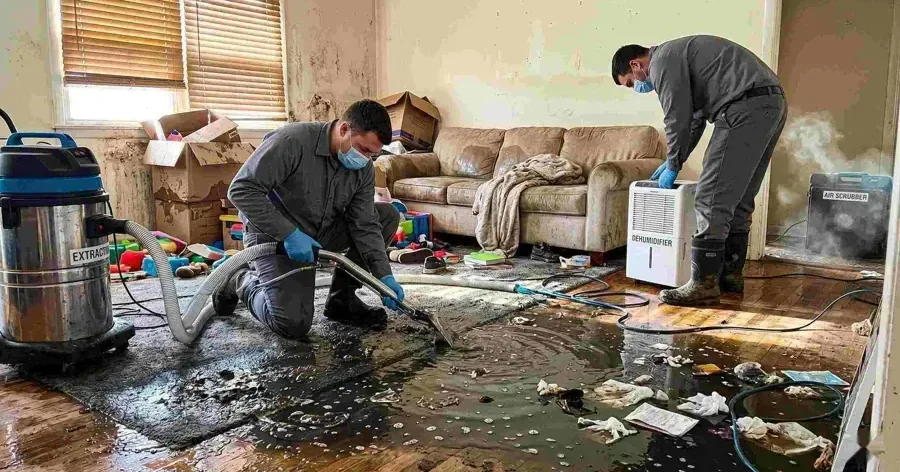
What to do first about water extraction and removal
- 1
Stop the source
Close the valve, or let the tide fall, so no new water arrives.
- 2
Pump and vacuum
Pumps clear deep water and wet vacuums remove the last film from floors.
- 3
Remove soaked items
Padding, loose insulation and ruined contents are bagged out.
- 4
Map the moisture
Meters and a thermal camera show where the water traveled.
How water extraction and removal is handled, step by step
Each step follows the IICRC S500 drying standard, and the right-hand column is the record that step leaves in the claim file.
- 01AssessSafety, power and water type are checked before any equipment starts.Moisture map with the category and class
- 02ExtractStanding water is removed and the amount recovered is noted.Timestamped photos before anything is removed
- 03DocumentPhotos and readings are saved for the property owner and adjuster.Daily psychrometric and moisture log
- 04Hand offThe wet structure moves into the drying plan with equipment set.Final readings against a dry reference
What does water extraction and removal cost in Salem, MA?
Pumping out a small clean water area usually starts at $600, while a whole floor or basement can reach $7,000, depending on the rooms involved and the water type. A written scope after the first readings confirms the figure.
Small area, clean water
$600 to $1,500
- One room or less
- Pump and vacuum
- Light drying follows
Several rooms
$1,500 to $3,500
- Rooms on one level
- Padding removed
- Extra drying equipment
Whole floor or basement
$3,500 to $7,000
- Deep standing water
- Walls opened up
- Longer drying run
These are typical ranges, never a quote. The category of water, the square footage, the material class and how fast drying started move the number most. The water damage cost calculator gives a closer planning range.
Pulling water out early decides how much of a building can be saved. In Salem the water arrives from several directions: a tide that tops a wall, a river that spills over its banks, or a pipe that lets go inside a wall. Each source calls for a slightly different response.
Tidal and storm water here
On March 2, 2018, a high tide pushed the North River over its banks and flooded Bridge Street, and in January 2024 seawater ran through streets around Collins Cove and The Point. Water from outdoors carries silt and bacteria, so it is treated as contaminated and the affected materials are handled with care.
- Pumps clear deeper water, then wet vacuums lift the last film from the floor.
- Padding that soaked up outdoor water is cut out and discarded.
- Hard surfaces are rinsed and sanitized before drying starts.
- Baseboards are pulled when water has wicked in behind them.
What happens after the pumping
Extraction is only the first half of the job. Even when no water is visible, wood floors, plaster and framing hold moisture that a meter can find and the eye cannot. Technicians map those readings and set air movers and dehumidifiers so the building dries evenly, which is the work described under structural drying.
Water on the floor right now? A crew can talk through the situation and plan the pumping for the building.
Salem extraction helpWhen to call for a crew
Call as soon as water covers a floor, especially in apartment buildings where it can drop to the unit below, or when it came from a drain or the tide.
Keep clear of wet outlets
Switch off the breaker for wet rooms first. Standing water near outlets, cords or a running boiler can carry current.
Water extraction and removal across Salem and nearby
Extraction crews reach homes and shops in 01970, from the waterfront around Derby Street and Pickering Wharf to Mack Park, Castle Hill, Vinnin Square and the Highland Avenue corridor and the streets between.
The same service nearby: water extraction and removal in Beverly, Lynn, Peabody.
Related water damage services
Water Extraction and Removal questions, answered
What owners ask most about water extraction and removal, from drying time to the claim file.
Ask the drying team by phoneHow soon does extraction need to happen?
Water starts soaking into drywall, wood and insulation almost at once, so the earlier pumping begins the more material can stay. Waiting lets dampness spread to places a vacuum cannot reach.
Is tidal or river water handled differently?
Yes. Water from outside carries silt and bacteria, so it counts as contaminated. Carpet, padding and porous drywall usually come out, and hard surfaces are cleaned and sanitized after pumping.
Can wet carpet be saved after extraction?
Clean water caught early can often be extracted and dried in place, though the padding underneath is frequently replaced. Contaminated water means the carpet itself is usually removed.
What equipment removes standing water?
Submersible and truck mounted pumps clear deep water, while wet vacuums with extraction wands finish carpet, tile and wood. Meters then check what the pumps could not reach.
Does extraction include drying the building?
Extraction removes liquid water only. Drying with air movers and dehumidifiers comes next, as laid out in the Beverly structural drying page, and both phases normally run as one job.
Should power stay on in a flooded room?
No. Breakers for wet rooms should be switched off, and standing water near outlets or cords should be avoided until a technician confirms the area is safe to enter.
Standing water does not wait
The longer water sits, the more the floors and walls absorb it. Describe the source and a technician will outline the removal.